
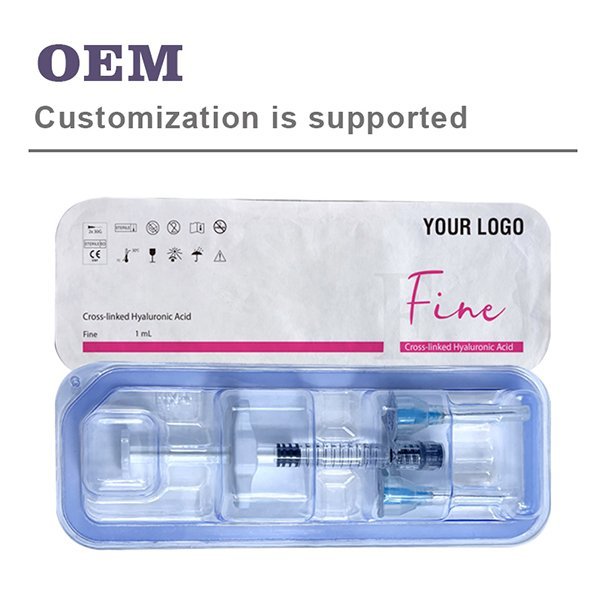
وقتی به صادرات کره فکر می کنید, احتمالاً ذهن شما به سمت گوشی های هوشمند سامسونگ می رود, ماشین های هیوندای, یا آلبوم های BTS. اما یک سکوت وجود دارد, high-margin giant rapidly climbing the charts: OEM dermal filler production. This isn’t just a niche medical trend; it’s a full-blown industrial phenomenon. The numbers are stark. According to the Korea Health Industry Development Institute, Korea’s cosmetic medical device export value grew by over 18% در 2023, with fillers being a primary driver. For global distributors, this isn’t about jumping on a bandwagon; it’s about securing a position in a supply chain that has become the global benchmark for quality, innovation, and scalability.
The Engine Room: How Korea Built a “Filler Fabrication” Juggernaut
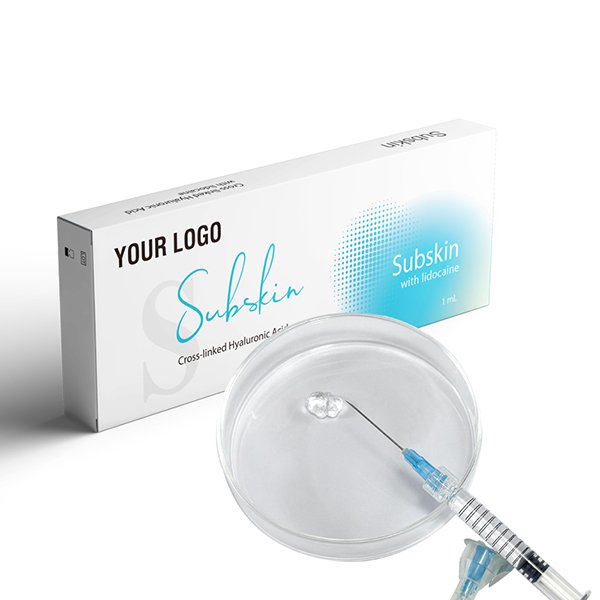
Walk into a modern Korean OEM filler plant, and you’ll see an operation that mirrors the precision of a semiconductor cleanroom. The boom didn’t happen by accident. It’s the result of a perfect storm of factors. اول, decades of domestic demand. Korea’s advanced cosmetic surgery and aesthetics market, one of the world’s most competitive, served as a live testing ground. Local manufacturers had to innovate rapidly to meet the discerning standards of Korean clinics and consumers. This created a feedback loop where products were refined in real-time.
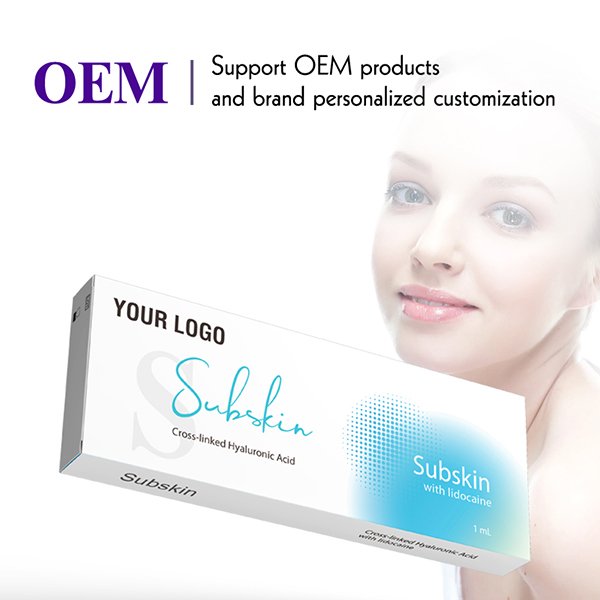
دوم, را government’s strategic push into the biotech and “K-Beauty” sectors funneled significant R&D investment and regulatory streamlining. It became easier to establish compliant, high-tech manufacturing facilities. سوم, and crucially, را mature local supply chain. From raw hyaluronic acid (HA) sourcing to precision syringe and needle manufacturing, everything is available within a short radius. This reduces lead times and costs dramatically. برای خریدار B2B, this translates to reliability. When you order from a top-tier Korean OEM, you’re not just buying a product; you’re buying into an ecosystem with proven stability and deep reserves of technical expertise. Production delays due to a missing component are rare.
Key Comparative Advantage Table: Korean OEM vs. Traditional Production Hubs
| عامل | Korean OEM Hub | Generic Low-Cost Manufacturing Region |
|---|---|---|
| Innovation Cycle | Extremely fast (6-12 ماه ها), driven by intense domestic competition. | Slower (18-36 ماه ها), often reliant on following trends. |
| Quality Benchmark | Meets & often exceeds stringent KR FDA, اتحادیه اروپا MDR, and US FDA standards. | Often targets baseline CE or local certification only. |
| زنجیره تامین | Highly integrated, localized raw material & component supply. | Fragmented, dependent on international logistics for key parts. |
| Technical Support | Offers deep formulation science, application training, and regulatory guidance. | Primarily basic manufacturing support. |
| مقیاس پذیری | Designed for rapid scale-up to meet large global orders without quality loss. | Can struggle with quality consistency during rapid scale-up. |
Beyond Hyaluronic Acid: The Tech Stack Driving Global Orders
The conversation has moved far beyond “just HA.” Korean labs are leading the charge in next-generation formulations that answer specific market demands. Polydioxanone (PDO) بالابرهای نخی, هیدروکسی لاپاتیت کلسیم (CaHA) biostimulators, and Polycaprolactone (PCL)-based fillers are rolling off production lines. Why does this matter for a distributor? Because you’re future-proofing your portfolio. A clinic in Europe is now asking for collagen-stimulating biostimulators, not just volumizing fillers. A chain in Latin America needs longer-lasting solutions. Korean OEMs are equipped with the R&D to co-develop these customized products.
The real secret sauce is in the cross-linking technology and particle engineering. It’s not just about the ingredient; it’s about how it’s structured. Advanced cross-linking creates HA that is more resilient, longer-lasting, and with a lower risk of swelling. Precise particle sizing in CaHA or PCL products determines how they integrate with tissue and stimulate collagen. Korean engineers treat filler formulation like software development—iterative, data-driven, and focused on user experience (the injector and the end-patient). برای یک توزیع کننده, partnering with an OEM that masters this tech stack means you can offer your clients a tiered, sophisticated product lineup that commands higher margins and builds brand authority.
The B2B Playbook: Why Smart Distributors are Locking in Korean Partnerships
In today’s volatile global market, a sourcing strategy based solely on finding the lowest price per unit is a race to the bottom. The leading distributors are building strategic partnerships with Korean OEMs. Here’s the calculus: Regulatory arbitrage is dead. Markets from Saudi Arabia’s SFDA to Brazil’s ANVISA are tightening regulations. Having a product dossier built on Korean GMP certification, which is respected globally, drastically simplifies and accelerates your registration process in new territories. It de-risks your market entry.
علاوه بر این, را private label and white-label flexibility is unparalleled. A serious Korean OEM doesn’t just slap your logo on a standard syringe. They work with you on viscosity, خاصیت ارتجاعی (جی پرایم), lidocaine concentration, and needle gauge to create a product that fits your exact market niche. Need a softer filler for delicate under-eye work in Southeast Asia? They can tweak the formulation. Require a higher G-prime filler for jawline contouring popular in the Middle East? That’s a standard request. This level of collaboration turns you from a reseller into a market-specific brand owner. این 2024 export data shows a clear trend: the growth is not in bulk generic HA, but in these customized, specialized formulations.
پیمایش در مشارکت: Due Diligence for the Discerning Buyer
The label “ساخت کره” carries weight, but not all OEMs are created equal. Your due diligence is critical. اول, audit the certifications physically. Don’t just check a box for ISO 13485. Look for active MDSAP (Medical Device Single Audit Program) certification or evidence of passing audits for EU MDR. دوم, probe their R&D pipeline. Ask what they are developing for 2025. A good partner is already working on the next big thing. سوم, assess their supply chain resilience. How did they navigate recent global logistics crises? What’s their raw material backup strategy?
در نهایت, understand their communication cadence. You need a partner, not just a factory. Do they have English-speaking project managers and technical support who can respond in your time zone? The logistical advantage of Korea’s geography—with major ports like Busan—is a tangible benefit for shipping to both North America and Europe. Locking in a partnership now is about securing capacity in a sector where demand is outstripping the ability of top-tier manufacturers to supply.
کیو حرفه ای&A برای توزیع کنندگان
Q1: We’re concerned about market saturation with HA fillers. Is the Korean OEM boom sustainable?
A1: کاملا. The boom is evolving, not stagnating. Sustainability comes from diversification. Leading Korean OEMs are pivoting from pure HA into the higher-growth segments of biostimulators (CaHA, PLLA, PCL) and specialized delivery systems like cannulas and hyper-targeted fillers. The innovation cycle ensures the market stays dynamic. Your sustainable advantage comes from partnering with an OEM that invests heavily in this next-wave R&D, allowing you to lead with new categories, not just compete on HA price.
Q2: How significant is the regulatory advantage when sourcing from Korea versus other regions?
A2: It’s a primary decision-making factor. Korea’s MFDS (وزارت ایمنی غذا و دارو) operates a regulatory framework that is closely aligned with the EU’s MDR and is highly respected by regulators in the Middle East, آسیای جنوب شرقی, and Latin America. Starting your product registration with a full Korean MFDS technical file, often including clinical data from Korean studies, can cut 6-12 months off your time-to-market in a new country compared to a dossier from a region with less stringent oversight. It’s a critical path accelerator.
Q3: For a distributor looking to private label, what level of customization can we realistically expect from a Korean OEM?
A3: You can expect deep, science-led customization. Beyond branding and packaging, you can collaborate on:
- Rheological Properties: Adjusting the G’ (سفتی) و جی” (ویسکوزیته) for specific indications.
- Formulation: Varying HA concentration, چگالی اتصال متقابل, particle size in biostimulators, and lidocaine percentage.
- Delivery System: Choosing needle length, gauge, or developing custom cannula kits.
- Packaging: Designing unit-dose, multi-pack, or clinic-display formats.
The baseline is a true co-development project, not just a menu of pre-set options.
Q4: What are the hidden logistical or compliance risks we should mitigate in our contracts?
A4: Key risks to address contractually include:
- Change Notification: Ensure the OEM is contractually bound to notify you of any change in raw material supplier, manufacturing process, or facility, as this may trigger a need for you to re-register the product in your markets.
- IP Ownership: Clearly define that all custom formulation IP developed for you is owned by your company.
- Supply Chain Transparency: Require visibility into secondary suppliers for critical components (به عنوان مثال, سرنگ ها, درپوش ها) to assess single points of failure.
- حداقل تعداد سفارش (MOQs) and Lead Times: Negotiate realistic MOQs that match your market entry strategy, with clear penalties for delays that are within the OEM’s control.