
So, What Exactly Is Monophasic HA Gel?
Let’s cut straight to the point. Monophasic Hyaluronic Acid (HA) Gel is a specific type of dermal filler. The term “monophasic” means it consists of a single, smooth, homogeneous phase. Imagine a perfectly blended smoothie versus one with separated chunks of fruit and yogurt – monophasic is the smooth, uniform one. In technical terms, it’s a non-particulate gel where the HA chains are uniformly cross-linked and integrated into a single cohesive matrix. This is different from biphasic gels, which contain distinct cross-linked HA particles suspended in a separate HA gel medium.
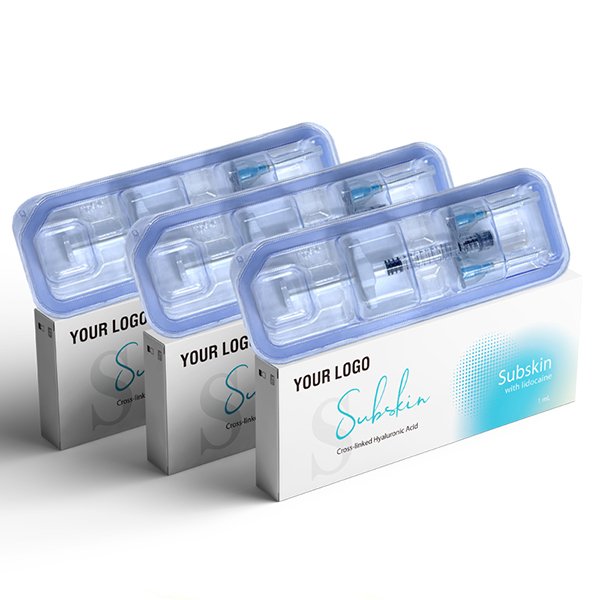
For you as a B2B dealer, this translates to a product with unique physical properties: exceptional smoothness, high elasticity (G’), and high viscosity. It’s designed for precision, stability, and predictable, long-lasting results. When injected, it integrates as a single, continuous mass into the tissue, providing natural-looking volume and support. Its primary component, Hyaluronic Acid, is a sugar molecule naturally found in our skin, responsible for hydration and volume. In monophasic gels, this HA is chemically cross-linked to resist degradation by the body’s enzymes, prolonging its effect typically between 9 to 18 months, depending on the product’s formulation and injection site.
The Technical Edge: Why Monophasic HA Stands Out in Your Portfolio
You might handle various fillers, but monophasic HA gels offer distinct selling points for medical professionals. Their homogeneous structure provides superior structural integrity and lifting capacity. Think of it as a reliable, strong yet flexible scaffolding for facial tissue. This makes them the go-to choice for deep dermal injection and supraperiosteal placement for volume restoration—like enhancing cheekbones, jawline contouring, or chin augmentation. Their high cohesivity means the gel tends to stay where it’s injected, minimizing the risk of migration or diffusion, a key concern for practitioners.
From a manufacturing and quality control perspective that you can communicate to your clients, monophasic technology allows for consistent product behavior. Every syringe delivers the same uniform viscosity and extrusion force, giving practitioners reliable tactile feedback. This consistency reduces the learning curve for new users and builds trust in your brand. Furthermore, the smooth gel minimizes the risk of clogging fine-gauge needles (commonly 27G or even 30G), ensuring a smooth injection process, which is a practical benefit your clinician customers will appreciate during long procedure days.
Matching Gel Rheology to Application: A Dealer’s Guide
Not all monophasic gels are identical, and their application depends heavily on their rheological properties—essentially, how they flow and deform. This is your core knowledge for advising clients. The key parameters are G’ (elasticity/stiffness) and G” (viscosity). A high G’ indicates a firm gel with strong lifting ability, ideal for deep structural work. A balanced G’ and G” offer versatility for mid-to-deep dermal placement.
Here’s a simple breakdown for your product lines:
- High G’/High Viscosity Gels: Market these as your “volumizers” or “sculptors.” Used for cheek augmentation, chin enhancement, and jawline definition. They provide strong projection and support.
- Medium G’/Cohesive Gels: These are your versatile “correctors.” Perfect for nasolabial folds, marionette lines, and mid-face volume. They balance moldability with durability.
- Softer, Cohesive Gels: Position these for “subtle enhancement” and superficial lines. While still monophasic, they have lower elasticity for lips, fine perioral lines, or tear troughs (with expert technique). They integrate softly for natural movement.
Understanding this allows you to move beyond selling a single “monophasic filler” to providing a tailored portfolio that addresses the full spectrum of a clinic’s needs.
Global Market Pulse: The Data Behind the Demand
For a strategic B2B partner like you, real-time data is crucial. The global dermal filler market is experiencing robust growth, driven by an increasing preference for minimally invasive procedures. Monophasic HA gels are capturing a significant share due to their proven efficacy and safety profile. Here’s a snapshot of the current landscape:
| Market Segment | Estimated Global Market Value (2024) | Projected CAGR (2024-2030) | Key Driver for Monophasic HA Demand |
|---|---|---|---|
| Dermal Fillers (Overall) | ~USD 7.5 Billion | ~8.5% | Aging population & rising aesthetic awareness. |
| Hyaluronic Acid-based Fillers | ~USD 5.3 Billion | ~9.2% | Gold-standard status, reversibility with hyaluronidase. |
| Monophasic HA Gel Segment | Niche data within HA segment, but growing. | Estimated higher than HA average | Preference for predictable lifting, volume, and longevity. |
| Key Growth Regions | North America, Asia-Pacific, Western Europe | APAC leading growth (>10% CAGR) | Medical tourism, expanding middle class, social media influence. |
Data synthesized from recent industry reports (Grand View Research, Fortune Business Insights, MedTech Outlook).
The trend is clear: practitioners are seeking reliable, high-performance products. Monophasic gels, with their defined rheological profiles, fit directly into the trend of personalized, technique-driven treatment plans. The Asia-Pacific region, in particular, presents a massive opportunity, with countries like China, South Korea, and India rapidly expanding their medical aesthetic markets.
Professional Q&A: Addressing Key Dealer & Practitioner Queries
Q1: For a distributor new to fillers, what’s the single biggest advantage of stocking monophasic HA gels over other types?
A: Predictability and a clear use-case narrative. Monophasic gels have well-defined physical properties (G’, viscosity) that directly correlate to specific clinical applications (e.g., high G’ for deep volume). This makes it easier for you to train your sales team and for clinicians to select the right tool for the job, reducing complications and increasing patient satisfaction. It simplifies inventory into a logical, performance-based portfolio.
Q2: A client asks about the “nodule” risk they’ve heard about with fillers. How do monophasic gels address this?
A: Monophasic gels, due to their homogeneous nature, have a lower inherent risk of forming palpable nodules compared to some biphasic gels where particles can clump. Their smooth, cohesive matrix integrates evenly. However, proper injection technique by a trained professional remains paramount. You can position this as a product-level safety feature that supports good technique.
Q3: How should I advise my clinic clients on storage and handling?
A: Emphasize cold chain integrity. While most HA gels are stable at room temperature for a defined period, consistent refrigeration (2-8°C) is non-negotiable for maintaining optimal sterility, viscosity, and shelf life (typically 24-36 months from manufacture). Always recommend they follow the specific IFU (Instructions for Use) for each product. This protects product efficacy and your brand’s reputation.
Q4: Is there a verifiable difference in longevity I can quote to practitioners?
A: Yes, but with context. Independent studies and clinical experience show that monophasic gels often demonstrate prolonged duration in areas requiring structural support (like cheeks) due to their resistance to deformation and degradation. You can reference data showing results often lasting 12-18 months. However, always pair this with the disclaimer that longevity varies by product, injection site, patient metabolism, and technique. Provide them with the specific clinical data from your manufacturer’s studies for each product code.