
Beyond Beauty: HA Injection as a Multi-Industry Game-Changer for Distributors
What Exactly Are We Talking About? The Core Science of HA
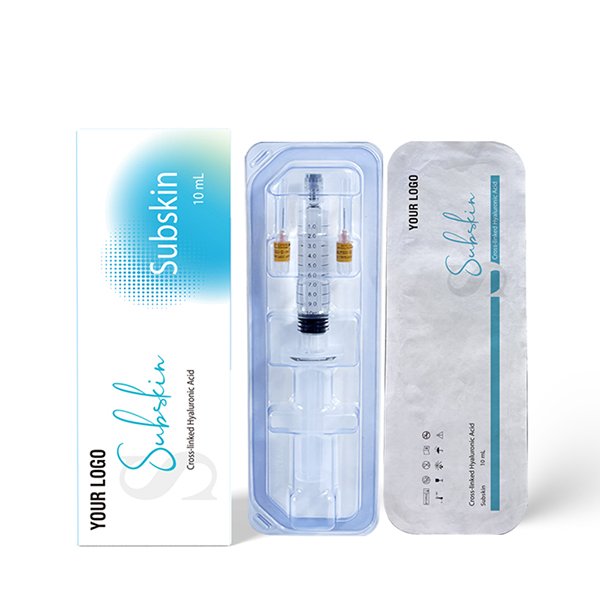
Let’s cut straight to the point. HA Injection stands for Hyaluronic Acid Injection. Forget the jargon; think of HA as a super-absorbent, gel-like substance your body makes naturally. Its core job is to bind to water, providing lubrication, volume, and structure. When we talk about medical-grade HA for injection, it’s this same molecule, but stabilized through advanced cross-linking technologies (like BDDE or DVS) to last longer in the body. This isn’t a foreign substance; it’s biocompatible and biodegradable. For you as a distributor, the key takeaway is this: you’re dealing with a platform technology. Its application isn’t fixed—it’s defined by the particle size, cross-linking density, and concentration. A fine gel for smoothing fine lines behaves completely differently in the joint space. The raw material science (primarily produced via bacterial fermentation for high purity) is stable, but the product design is where the market differentiation happens.
From Clinic to Court: HA’s Dominance in Medical Aesthetics & Beyond
The aesthetic medicine channel is your high-volume, high-awareness entry point. The global dermal filler market, where HA holds over 80% share, is projected to reach USD 9.7 billion by 2030, growing at over 8% CAGR. But let’s move past just “removing wrinkles.” The real driver now is precision and anatomy. Distributors need to stock a portfolio: highly cohesive, viscous fillers for chin and jawline sculpting; soft, malleable gels for lip enhancement; and micro-particle gels for under-eye rejuvenation. The trending demand is for products that offer natural-looking structural support. Beyond the face, HA is scaling fast in body contouring (hand rejuvenation, décolletage) and biorevitalization—injectable mesotherapy using non-cross-linked HA to improve skin quality. For B2B, this means your clinic customers aren’t buying one “filler”; they need a toolkit. Your technical support in explaining the G’ value (elastic modulus), viscosity, and extrusion force for different applications is what wins bulk contracts.
Performance & Recovery: HA’s Surging Role in Sports Medicine and Wound Care
This is where the narrative shifts from elective to essential. In orthopedics and sports medicine, intra-articular HA injections (often called viscosupplementation) are a first-line intervention for osteoarthritis. The latest data shows a global market growing steadily, with North America leading but Asia-Pacific seeing the fastest adoption. For distributors, the unit volume here is significant. We’re talking prefilled syringes in standardized doses (e.g., 2ml per knee injection). The product specifications are stringent—sterility, pyrogen-free, and high molecular weight are critical. The adjacent, high-growth sector is wound healing. HA-based dressings and gels are revolutionizing chronic wound management (diabetic ulcers, burns). They create a moist, hydrated matrix that accelerates tissue regeneration. For exporters, this means engaging with medical supply companies and hospital procurement groups, where tenders require ISO 13485 certification, clinical study data, and clear regulatory pathways (like FDA 510(k) or CE MDD/MDR).
Market Realities & Sourcing Strategy for Global Distributors
Navigating the HA injection supply chain requires sharp strategy. Quality and compliance are non-negotiable. As a savvy distributor, your due diligence checklist must include:
- Manufacturer Certifications: ISO 9001, ISO 13485, and compliance with destination market regulations (US FDA, EU MDR, China NMPA).
- Product Portfolio Depth: Can your supplier provide a range from aesthetic fillers to viscoelastic OVDs (Ophthalmic Viscosurgical Devices) for cataract surgery? This diversity protects your business.
- Logistics & Stability: HA gels are sensitive to temperature. Reliable cold-chain logistics and clear shelf-life data (typically 24-36 months) are mandatory.
Here’s a snapshot of the differentiated product segments you should consider in your portfolio:
| Segment | Primary Application | Key Product Differentiators | Target Client |
|---|---|---|---|
| High-G’ Fillers | Facial Contouring, Chin, Jawline | High Cohesivity, Lifting Capacity | Aesthetic Clinics, Plastic Surgeons |
| Medium-Viscosity Fillers | Nasolabial Folds, Cheek Volume | Balance of Malleability & Support | Medical Spas, Dermatologists |
| Soft Fillers | Lip Augmentation, Fine Lines | Low G’, Smooth Integration | Injectors, Dentists |
| Viscosupplements | Knee Osteoarthritis | High Molecular Weight, Purity | Orthopedic Clinics, Hospitals |
| Wound Care Gels | Chronic Ulcers, Burn Care | Non-Cross-Linked, Sterile | Hospital Procurement, Pharmacy Chains |
Straight Talk: Answering Top Distributor Questions
Q1: With so many suppliers, how do I ensure consistent quality and avoid supply chain disruption?
A: Partner with manufacturers who control the entire process from fermentation to filling. Audit their facilities (virtual or in-person). Demand batch-to-batch CoA (Certificate of Analysis) and ask about their raw material (HA sodium salt) sourcing. Diversify your product sources but qualify no more than 2-3 core manufacturers to maintain quality control.
Q2: How do regulatory pathways differ for aesthetic vs. medical HA products?
A: Completely different. Aesthetic fillers are Class III medical devices in most regions, requiring extensive clinical trials for approval (like PMA in the US). Viscosupplements are also Class III but often follow a 510(k) route. Wound care products may be Class II. Your manufacturer must provide clear regulatory guidance and documentation support for your target markets. Never assume one product’s approval applies to another country.
Q3: What’s the current trend in HA technology that will drive future demand?
A: Longevity without permanence is key. The race is for fillers that last 18-24 months while being fully reversible. Look for manufacturers innovating in cross-linking technology (like polydensity matrices). Secondly, combined products like HA with microspheres of calcium hydroxylapatite or with added nutrients (amino acids, vitamins) for enhanced bio-stimulation are gaining traction. Stocking these next-gen products positions you as a leader.
Q4: Is the market saturated? Where are the untapped opportunities?
A: The core aesthetic markets (US, Western Europe, Korea) are competitive but still growing. The untapped potential lies in emerging economies (Southeast Asia, Latin America, Middle East) where medical tourism and disposable income are rising. Furthermore, veterinary applications for animal osteoarthritis is a niche, high-margin sector with little competition. Diversifying into these channels can be highly profitable.