
HA Filler: The Billion-Dollar Backbone of Beauty, 웰빙, and Medical Innovation
바로 본론으로 들어가자. HA Filler, or Hyaluronic Acid Filler, is no longer just a cosmetic commodity. For B2B distributors and global suppliers, it’s the dynamic, cross-industry engine driving revenue streams from clinical aesthetics into expansive new medical and wellness verticals. At its core, HA is a sugar molecule (a glycosaminoglycan) naturally found in our skin, 관절, 그리고 눈. What makes it a commercial powerhouse is its unparalleled capacity to bind and retain water—up to 1,000 무게의 배. 현대의, network-technology-based fillers stabilize this molecule, creating clear gels of varying density and elasticity designed for precise tissue integration and volumizing effects. 당신을 위한, 배포자, this isn’t just about selling vials; it’s about supplying a versatile biomaterial with scientifically-defined performance characteristics.
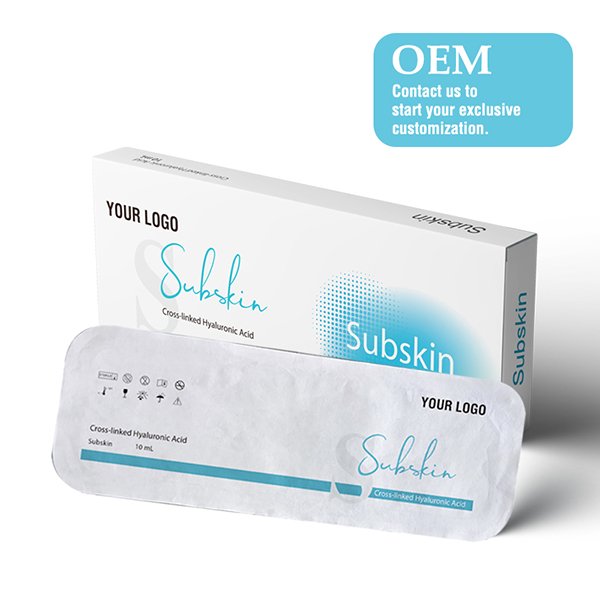
The Technical Core: 그 너머에 “One Gel Fits All” – Precision Engineering for Tissue
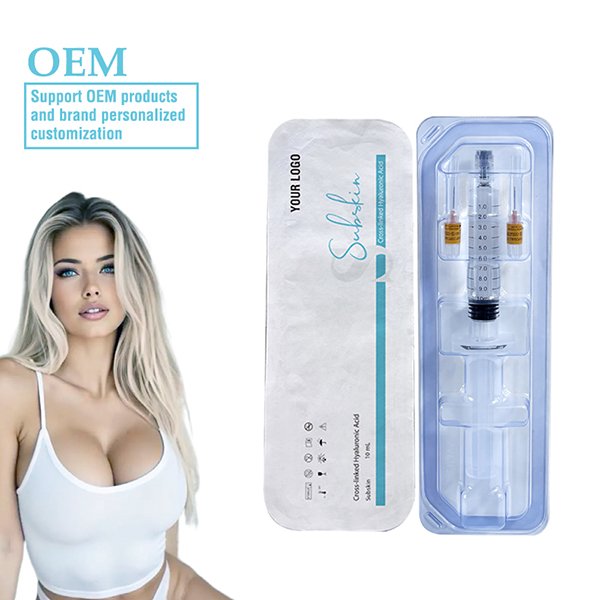
The market has moved past generic HA. Today’s top-tier production, like our own facility in China utilizing full aseptic filling lines and EU GMP/ISO 13485 standards, focuses on creating a portfolio of products, each with engineered properties. The key variables are particle size, 가교 밀도, and gel hardness (G-프라임). A fine, fluid gel is engineered for superficial fine lines and lip hydration, integrating seamlessly. A highly cross-linked, cohesive gel with a high G-prime is designed for deep structural volumizing in cheeks or jawline, providing lift and projection with longevity. 대리점용, this means you can cater to a clinic’s entire treatment menu—from delicate perioral lines to demanding hand rejuvenation—with a single, trusted brand. The technical specification sheets, 유변학 데이터, and injection guidelines are your tools to educate clients, moving the conversation from price to performance and clinical outcomes.
The Market Reality: Data-Driven Growth and Diversification
The global HA dermal filler market is not just growing; it’s segmenting and accelerating. Real-time data projects the market to reach USD 9.8 10억 단위로 2028, with a CAGR of over 12%. The driver is no longer solely Western markets. Look at the APAC region, particularly China, 한국, and Southeast Asia, where growth rates are consistently 3-5 percentage points above the global average. The demand is bifurcating: 프리미엄, high-G-prime fillers for sculpting and high-value treatments, and cost-effective, naturalistic hydrating fillers for broader preventive wellness programs. The table below breaks down the immediate opportunity segments you should strategize for:
| Market Segment | Key Product Demand | Growth Driver | Notes for Distributors |
|---|---|---|---|
| Medical Aesthetics | High-cohesivity fillers, lidocaine blends | Aging populations, social media, medical tourism | Requires strong clinical training support. Highest ASP. |
| Corrective & Reconstructive | Sterile, highly-purified HA for scars, lipoatrophy | Rising trauma & surgery cases, HIV management | Often tender-based procurement via hospitals. |
| Functional Wellness | Low-concentration, hydrating skin boosters | Preventative aesthetics, holistic health trends | 대용량, recurring revenue model. |
| Emerging Regions | Balanced portfolio, focus on value & 훈련 | Increasing disposable income, clinic expansion | Price sensitivity exists, but demand for quality is rising. |
Cross-Industry Application: Your Untapped Distribution Channels
Think beyond the aesthetic clinic. The same fundamental technology—high-purity, viscoelastic HA—is creating orders in adjacent fields. In orthopedics, HA injections (viscosupplementation) for knee osteoarthritis are a standard of care, representing a massive, recurring bulk order channel. In ophthalmology, HA is used as a viscoelastic protector during cataract and other surgeries. The emerging frontier is regenerative medicine, where HA serves as a scaffold for cellular therapies and wound healing. 미래 지향적인 유통업체를 위한, this means one core supplier (like us) can feed multiple, non-competing verticals through different sub-distribution networks. It de-risks your business and maximizes container load efficiency.
The Sourcing Imperative: Quality, Audit, and Supply Chain Resilience
Your B2B clients—clinics, hospitals, and importers—are under more regulatory scrutiny than ever. They need a manufacturer who is a partner in compliance. This is where the narrative of Chinese manufacturing has irrevocably shifted. We’re talking about full raw material traceability (동물이 아닌, bacterial fermentation origin), terminal sterilization methods, and packaging that meets the latest MDR (EU) and FDA guidelines. Real-time inventory visibility, batch-specific Certificate of Analysis (CoA) availability in digital format, and adaptable MOQs are now the baseline. 그만큼 2024 distributor doesn’t just ship boxes; they provide a seamless, 준수, and document-backed supply chain that their end-clinics can trust implicitly. Your due diligence on your supplier’s audit readiness directly protects your reputation and bottom line.
프로페셔널Q&대리점을 위한 A
큐: With so many HA filler brands, how do we justify the choice of a Chinese manufacturer to our skeptical clients in Europe?
에이: Focus on parity and beyond. The benchmark is no longer “as good as,” but identical in quality with superior agility. Our production complies with the same EU MDR and FDA Part 820 standards as Western brands. We provide identical documentation—CE certificates, full clinical evaluation reports, and Device Master Files. The differentiator is direct access to R&D for custom formulations, faster lead times to adapt to market trends, and more competitive pricing that increases your margin while remaining compliant.
큐: How critical is lidocaine in the filler formulation for market acceptance today?
에이: It is now a market standard, not an option. Over 85% of new filler treatments in key markets specify pre-mixed lidocaine for patient comfort and streamlined clinic workflow. Distributors should prioritize suppliers whose entire portfolio includes lidocaine variants, with stability data proving the molecule’s integrity over the shelf life. Offering a non-lidocaine version is only for specific medical cases.
큐: What are the real logistical considerations for shipping HA fillers globally?
에이: Temperature control and regulatory labeling. HA fillers are sensitive to freezing and excessive heat. Reliable suppliers use validated insulated shippers with temperature loggers for high-value shipments. 결정적으로, ensure your supplier can handle country-specific labeling requirements—from multi-language IFUs to unique device identifiers (UDIs)—directly from the factory, saving you from costly relabeling operations at port.
큐: 우리는 본다 “스킨 부스터” 그리고 “hydrating fillers” as a growing category. Is this a separate product line?
에이: Technologically, it’s a continuum. They are typically lower-concentration, lower-cross-linked HA gels designed for mesotherapy or micro-droplet injection for skin quality improvement. For distribution, it’s a strategic entry product. It allows clinics to treat a younger demographic, creating a patient journey that may lead to traditional fillers. It also drives higher-volume, repeat purchases. A supplier with a strong skin booster portfolio gives you a competitive edge in the wellness-aesthetics convergence.