
끊임없이 진화하는 미용 의학의 세계에서, 히알루론산 (하아) chin fillers have emerged as a premier non-surgical solution for enhancing facial contour and balance. Beyond a simple cosmetic “quick fix,” this treatment is rooted in sophisticated biochemistry and precise anatomical application. It represents a fusion of cutting-edge science and artistic vision, offering individuals a path to a more defined jawline and improved profile without the need for invasive surgery. This article delves deep into the molecular science, application techniques, and transformative potential of HA fillers for the chin, providing a comprehensive look at why this procedure has become a cornerstone of modern facial aesthetics.
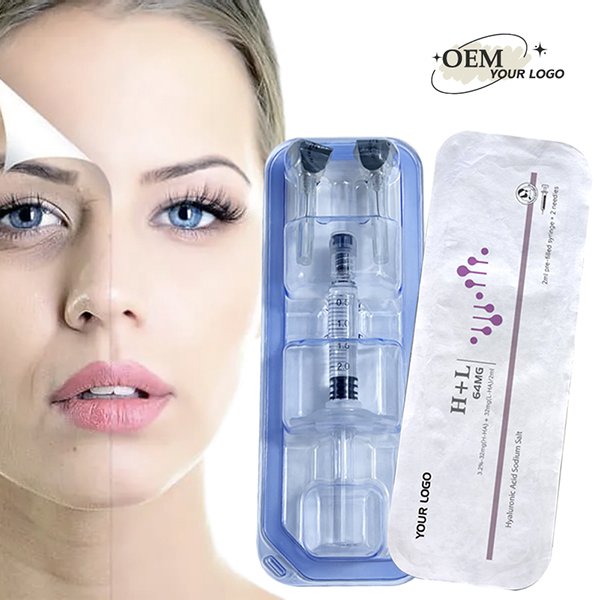
분자의 놀라운 일: 히알루론산 이해하기
To appreciate how chin fillers work, one must first understand the star ingredient: 히알루론산. Contrary to what the name might imply, HA is a substance naturally produced by our own bodies. It is a glycosaminoglycan—a long, unbranched sugar molecule—found abundantly in the skin, 결합 조직, 그리고 눈. Its primary biological role is to retain water, with a single gram capable of holding up to 물 6리터. This incredible hydrating capacity is what gives youthful skin its volume, 터고르, and plumpness.
미용 의학에서는, the HA used in fillers is not sourced from animals but is instead synthetically bio-engineered in laboratories through a bacterial fermentation process. This ensures a product that is pure, consistent, and free from animal proteins, minimizing the risk of allergic reactions. The key to its effectiveness as a filler lies in a process called 가교. Natural HA molecules are broken down by the body’s enzymes (히알루로니다제) in a matter of days. Through cross-linking, these molecules are chemically bonded together into a more robust, gel-like matrix. This stabilizes the product, giving it the longevity and structural integrity needed to provide contour and support for periods ranging from 9 에게 18 개월, 제품 및 개인별 대사에 따라.
When injected into the chin, this cross-linked HA gel acts as a biocompatible scaffold. It integrates into the tissue, binding water and adding volume precisely where needed. Its safety profile is exceptionally high because, in the unlikely event of an issue, its effects can be rapidly reversed with an enzyme (히알루로니다아제) that dissolves the filler.
Anatomical Artistry: Precision in Chin Augmentation
The chin is not an isolated feature; it is a critical pillar of facial harmony. Its proportions directly influence the perception of the nose, 입술, and neck. Aesthetic practitioners assess the chin in relation to several key facial landmarks and lines. The goal of augmentation is often to achieve a balance where:
- The tip of the chin aligns vertically with a line dropped from the lower lip.
- In profile view, the forehead, 입술, and chin exhibit a gentle, harmonious curvature (the Ricketts’ E-line).
- A well-defined mentolabial sulcus (the crease between the lower lip and chin) is maintained or created.
Injecting filler into the chin is a procedure of profound anatomical precision. The provider must have an intimate understanding of the mentalis muscle, the bone structure, and the fat compartments in the area. The product is typically placed in the deep supraperiosteal plane (뼈 위에) or in the submental fat compartment. This deep placement ensures a natural-looking, structural enhancement that moves with the face, rather than a superficial, unnatural bulge.
The technique involves small, strategic injections to build projection, 대칭성을 향상하다, or soften a cleft chin. An artistic eye is paramount, as the provider must visualize the final, three-dimensional outcome, accounting for how the added volume will interact with the entire lower face. This transforms the procedure from a simple injection into a form of non-surgical sculpting.
The Evolving Technology of HA Fillers
모든 HA 필러가 동일하게 생성되는 것은 아닙니다.. Manufacturers engineer their gels with distinct properties to suit different facial areas and treatment goals. For the chin—an area requiring significant structural support and longevity—a filler with high G-prime (탄성 계수) is essential. Think of G-prime as the filler’s “단단함” or ability to resist deformation under pressure; a high-G-prime product is more robust and ideal for lifting and projecting dense tissue like the chin.
Recent innovations have further refined these products:
- Vycross® Technology (예를 들어, Juvederm Volux): Uses a mix of long-chain and short-chain HA molecules to create a highly cohesive, yet smooth gel. Fillers like Volux are specifically designed for the jawline and chin, offering exceptional definition and longevity (data suggests up to 18-24 months in some cases).
- NASHA® Technology (예를 들어, 레스틸렌 리프트): Features a particle gel with precise particle sizing. This technology provides a strong lift and is FDA-approved for chin correction, offering a natural feel with sustained results.
- XpresHAn 기술™ (예를 들어, 테오시알 RHA 4): Designed to better mimic the natural, elastic HA in the skin. These Resilient Hyaluronic Acid fillers are highly flexible, making them suitable for dynamic areas and potentially more comfortable.
The choice of product depends on the patient’s anatomy, 피부 두께, 그리고 원하는 결과. A consultation with an expert practitioner is crucial to select the optimal tool for the job.
데이터, Trends, 및 안전 프로필
The demand for chin augmentation has seen a remarkable surge. 에 따르면 미국성형외과학회 (ASPS), 턱 확대 (both surgical and non-surgical) grew significantly in recent years, reflecting a broader trend toward lower facial contouring. The rise of the “Zoom effect” and a desire for a more defined profile in photographs and video calls are considered key drivers.
The safety profile of HA chin fillers is excellent when administered by a qualified professional. 흔한, 일시적인 부작용으로는 발적 등이 있습니다., 부종, 유연함, and bruising at the injection site. 더 심각한 합병증, 혈관폐쇄와 같은 (혈관 막힘), are exceedingly rare but underscore the critical importance of choosing a provider with expert knowledge of facial anatomy.
The table below summarizes key characteristics of leading HA fillers commonly used for chin augmentation:
| 제품명 (예) | 기술 | Key Indication for Chin/ Jawline | 전형적인 장수 | G-Prime/ Consistency |
|---|---|---|---|---|
| Juvederm Volux | Vycross® | 턱선 & 턱 윤곽 | 최대 18-24 months* | 매우 높음 |
| 레스틸렌 리프트 | 나샤® | 턱 확대 | 10-12 개월 | 높은 |
| 테오시알 RHA 4 | XpresHAn™ | Deep Dermal to Supraperiosteal | 12-15 months* | High/Resilient |
| 벨로테로 리브라 | CPM® | 가는 선 & Subtle Contouring | 6-9 개월 | Low-Medium |
*Longevity varies based on individual patient factors, 라이프 스타일, 그리고 주입 기술.
The Treatment Journey and Long-Term Care
A successful chin filler treatment begins with a 종합상담. This involves a facial analysis, 목표에 대한 토론, medical history review, and formulation of a personalized plan. 절차 자체는 비교적 빠릅니다., 자주 복용 30-45 분. Topical numbing cream is usually applied, and many fillers also contain integrated lidocaine for comfort during and after the injection.
결과는 즉시 눈에 보이는, 비록 결승전, settled outcome is apparent after 1-2 weeks as minor swelling subsides. 사후관리는 간단하다: patients are advised to avoid strenuous exercise, 과도한 열 (사우나, 일광욕), 그리고 술을 위한 24-48 hours to minimize swelling and bruising. Gentle massage as directed by the provider may help shape the product.
결과를 유지하려면, 터치업 트리트먼트 are scheduled typically once a year, as the product is gradually and naturally metabolized. This allows for subtle adjustments over time, enabling the enhancement to evolve gracefully with the patient’s face.
프로페셔널Q&A on Hyaluronic Acid Chin Fillers
1분기: How do I know if I’m a good candidate for chin filler versus needing a surgical genioplasty?
에이: This is a key distinction. Chin filler is ideal for individuals seeking moderate enhancement, improved contour, or better balance with other facial features. It is perfect for correcting mild to moderate retrogenia (a receding chin), softening a cleft, or improving symmetry. Surgical genioplasty (moving the chin bone) or a silicone implant is typically recommended for individuals with severe skeletal deficiency requiring significant advancement (more than 6-8mm) or vertical lengthening. A board-certified provider can assess your bone structure, skin elasticity, and goals to recommend the most appropriate path.
2분기: Can chin filler really make my neck look better?
에이: 전적으로. This is one of the most powerful but understated benefits. A weak, recessed chin can make the neck tissue appear looser or the jawline less distinct—even in individuals with a healthy weight. 에 의해 projecting the chin forward, filler creates a more acute cervicomental angle (the angle under the chin and neck). This enhances the definition between the face and neck, creating the illusion of a tighter, more sculpted jawline and neck contour. It’s a holistic approach to lower facial rejuvenation.
3분기: What are the latest techniques to ensure a natural-looking result?
에이: 분야가 쪽으로 움직이고 있다. multi-plane, micro-droplet techniques. Instead of placing a single large bolus of filler, expert injectors now use cannulas or fine needles to place small amounts of product in multiple tissue planes—deep on the bone for structure, and slightly more superficially for fine-tuning contour. This creates a seamless, integrated enhancement that moves naturally with facial expressions. The emphasis is on 구조적 지지 복원 rather than just adding volume.
4분기: With new products lasting 2 연령, is there a risk of the filler “building up” or looking unnatural over time?
에이: This is a vital consideration. While long-lasting fillers are convenient, they require an even higher level of artistry from the injector. 원리 “적은 것이 더 많다” 가장 중요하다. The goal is to use the minimal effective dose to achieve the desired projection. 뿐만 아니라, as the body naturally metabolizes about 90-95% of the product over time, any residual HA integrates subtly into the tissue. 하지만, repeated overfilling can lead to an unnatural appearance. This is why choosing an injector who prioritizes a conservative, anatomical approach is critical for beautiful, long-term outcomes.