
Hyaluronic acid (HA) fillers have become a cornerstone of non-surgical aesthetic treatments, prized for their ability to restore volume, smooth wrinkles, and enhance facial contours with minimal downtime. However, even with a skilled injector, results may not always match expectations. Whether it’s overcorrection, uneven distribution, or simply a change of heart, the question arises: can these fillers be undone? The answer is a qualified yes, thanks primarily to an enzyme called hyaluronidase. This article provides a comprehensive, up-to-date guide on filler reversal—how it works, when it’s used, what the process entails, and the critical considerations every patient should know.
Understanding Hyaluronic Acid Fillers and the Need for Reversal
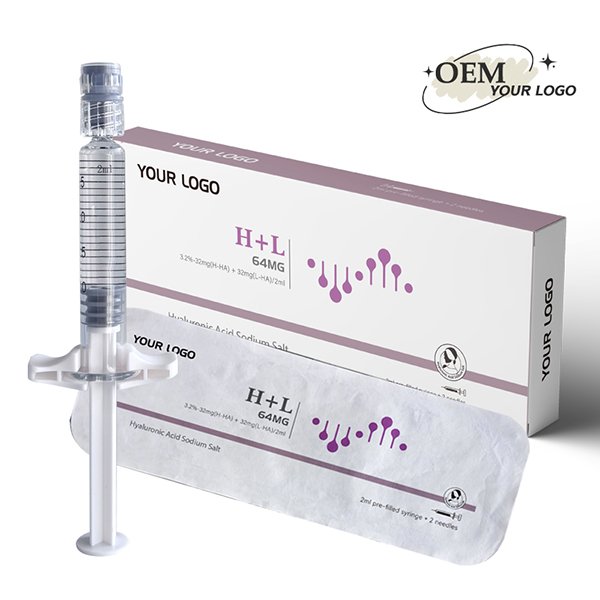
Hyaluronic acid is a naturally occurring sugar molecule in our skin that binds water, providing hydration and plumpness. Dermal fillers use a laboratory-made, cross-linked form of HA (such as Juvederm®, Restylane®, and Belotero®) that is structured to resist immediate degradation, offering results that can last from 6 to 18 months. While generally safe, outcomes can be less than ideal for several reasons:
- Overfilling: Too much product can lead to an exaggerated, “overdone,” or unnatural appearance.
- Misplacement: Filler placed incorrectly can create lumps, tyndall effect (a bluish discoloration under thin skin), or distort facial symmetry.
- Vascular Compromise: A rare but serious emergency where filler is accidentally injected into a blood vessel, blocking blood flow. This can threaten tissue survival (necrosis) or, in extremely rare cases, cause vision impairment if it blocks an ocular artery.
- Patient Dissatisfaction: The aesthetic may not align with the patient’s desires, or their personal preferences may evolve.
This is where the concept of reversibility becomes a significant safety and comfort advantage of HA fillers over other permanent or semi-permanent options.
Hyaluronidase: The “Eraser” for HA Fillers
Hyaluronidase is the antidote to HA fillers. It is a naturally occurring enzyme that breaks down hyaluronic acid by cleaving the glucosaminidic bonds between its sugar molecules. In aesthetic medicine, a purified animal-derived or recombinant human form (e.g., Hylenex®, Vitrase®, Amphadase®) is used.
How It Works:
When injected into an area treated with HA filler, hyaluronidase acts as a dispersive agent. It rapidly hydrolyzes (breaks down) both naturally occurring and injected hyaluronic acid, liquefying it. The body then naturally absorbs and eliminates these smaller fragments. This process can reduce or completely remove the filler’s volume effect.
Important Nuances:
- It’s Not Filler-Specific: Hyaluronidase breaks down all hyaluronic acid—both the injected filler and your skin’s natural HA. This means temporary thinning of the skin’s natural hydrated layer is a normal part of the process, though natural HA replenishes within 24-48 hours.
- Efficacy Varies: The enzyme’s effectiveness depends on the density and cross-linking of the HA filler. Softer, less cross-linked fillers (often used for fine lines) dissolve more quickly and completely than highly cross-linked, viscous fillers designed for deep volumizing.
- It’s a Medical Procedure: Hyaluronidase is a prescription drug. Its administration must be performed by a qualified, experienced medical professional (physician, nurse practitioner, or physician assistant under supervision) who can properly diagnose the issue, determine the correct dosage, and manage any potential reactions.
The Reversal Procedure: What to Expect
The process of reversing HA filler is typically straightforward but requires precision.
- Consultation and Assessment: A thorough evaluation is the first step. The provider will examine the area, discuss your concerns, and confirm that hyaluronidase is the appropriate solution. They will rule out other causes of swelling or nodules, such as infection or a foreign body granuloma.
- The Injection: Using a very fine needle, tiny amounts of hyaluronidase are injected directly into the areas of concern. The number of units used varies widely (often 5-75 units per treatment area) based on the filler amount, type, and the desired degree of correction. Sometimes, a small test dose is given first to check for allergy.
- Massage and Monitoring: The area is often gently massaged to help distribute the enzyme. You will be monitored briefly for any immediate reaction.
- Results and Follow-up: Initial dissolution begins within minutes, with significant softening often visible within 24 hours. Maximum effect is usually seen within 48 to 72 hours. One treatment is often sufficient, but for large volumes or very dense fillers, a second session may be needed 1-2 weeks later. The following table outlines a general timeline:
| Time After Injection | Expected Process & Outcome |
|---|---|
| Immediately to 1 Hour | Enzyme begins breaking down HA bonds. Possible mild increased swelling. |
| 24 Hours | Significant reduction in filler volume. Area appears softer, more natural. |
| 48-72 Hours | Peak effect. Majority of targeted filler is metabolized. |
| 1-2 Weeks | Final result is evident. Follow-up assessment to determine if additional treatment is needed. |
| Ongoing | The body continues to clear fragments. Skin’s natural HA is fully replenished. |
Risks, Side Effects, and Professional Considerations
While hyaluronidase is a powerful tool, it is not without its own risks and limitations.
Common, Temporary Side Effects:
- Redness, swelling, bruising, tenderness, and itching at the injection site.
- Temporary overdissolution or under-correction, which may require touch-up.
Less Common Risks:
- Allergic Reaction: Although rare, especially with recombinant human forms, allergy is possible. A skin test may be performed if there’s a history of sensitivity.
- Infection: As with any injection.
- Loss of Natural Tissue Volume: Since hyaluronidase affects natural HA, overuse or improper technique can lead to temporary atrophy or thinning of the treated area, making tissues appear slightly sunken. This typically resolves as natural HA reforms.
The Paramount Importance of Expertise:
Choosing a provider is the single most critical factor. An expert will:
- Accurately diagnose if reversal is truly needed or if waiting, massaging, or steroid injection is better.
- Use the minimum effective dose to preserve your natural tissue.
- Employ precise injection technique to target only the problem areas.
- Have a comprehensive emergency protocol in place.
Hyaluronidase is NOT effective for non-HA fillers (like Sculptra®, Radiesse®, or silicone). Different management strategies are required for complications from these products.
Conclusion: Reversibility as a Safety Net
The existence of hyaluronidase transforms hyaluronic acid fillers from a semi-permanent commitment into a more adjustable treatment. This reversibility is a key part of their safety profile, offering patients and providers a “reset” button for suboptimal outcomes or emergencies like vascular occlusion. However, it should not be viewed as a trivial correction for poor injection practices. The goal remains to achieve beautiful, natural results with strategic, conservative placement from the start.
If considering reversal, prioritize a consultation with a board-certified dermatologist or plastic surgeon who has extensive experience in both filler placement and complication management. Informed consent—understanding both the benefits and the risks of both the filler and the enzyme—is the foundation of safe and satisfactory aesthetic medicine.
Professional Q&A on Hyaluronic Acid Filler Reversal
Q1: How soon after a filler treatment can hyaluronidase be used if there is a problem?
A: It can be used immediately if necessary, particularly in the case of a suspected vascular occlusion, where it is a time-critical emergency treatment. For aesthetic concerns like overcorrection or lumps, many providers recommend waiting 2-4 weeks for initial swelling to fully resolve to accurately assess the true filler effect before deciding on reversal.
Q2: Can hyaluronidase dissolve my body’s own natural hyaluronic acid permanently?
A: No, the effect is temporary. Hyaluronidase does break down native HA in the treatment area, which is why tissues can appear temporarily thinned. However, your body continuously produces new hyaluronic acid. Natural levels typically replenish fully within 24 to 48 hours, restoring the skin’s baseline hydration and volume.
Q3: What is the difference between using hyaluronidase for an emergency vs. for aesthetic reasons?
A: The protocol differs significantly in dosage and urgency.
- Vascular Emergency: High doses (often 500-1500 units or more) are used immediately and may be injected directly into the occluded vessel area to rapidly dissolve the obstructing filler and restore blood flow. This is a medical emergency.
- Aesthetic Correction: Much lower, titrated doses (typically 5-75 units) are used strategically to subtly sculpt and reduce filler, preserving as much natural tissue architecture as possible.
Q4: Are the results of a hyaluronidase reversal permanent?
A: Yes, for the specific HA filler that was dissolved. The treated filler is permanently broken down and cleared by the body. However, you may choose to have new filler injected later to correct any over-dissolution or to try a different aesthetic approach. The reversal does not prevent you from having future filler treatments.
Q5: Based on current data, what is the incidence of major complications from hyaluronidase?
A: Severe complications are rare when administered by a trained professional. A 2023 review in the Journal of Clinical and Aesthetic Dermatology noted that significant allergic reactions are uncommon (<1%), especially with contemporary recombinant formulas. The most frequent "complication" is actually over- or under-correction, which underscores the need for an experienced, conservative injector. Real-time data from physician reporting platforms suggest that when used appropriately, hyaluronidase has an excellent safety profile.