
Introduction: Understanding Hyaluronic Acid Cheek Fillers
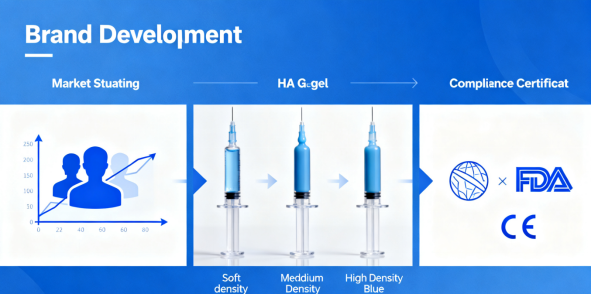
حمض الهيالورونيك (ها) cheek fillers have revolutionized the field of minimally invasive facial aesthetics, offering a sophisticated solution for volume loss, contour refinement, and facial rejuvenation. مع تقدمنا في العمر, subcutaneous fat pads in the mid-face descend and diminish, leading to flattening of the cheeks, the appearance of under-eye hollows, and the accentuation of nasolabial folds. This loss of structural support is a primary contributor to an aged, tired appearance. Enter hyaluronic acid fillers: gel-like substances that expertly restore this lost volume, re-establish youthful contours, and integrate seamlessly with the body’s own tissues.
HA is a sugar molecule naturally found throughout the body, with particularly high concentrations in the skin, الأنسجة الضامة, والعيون. Its remarkable ability to bind and retain water—up to 1,000 times its weight—is what makes it the gold standard in dermal fillers. على عكس الغرسات الدائمة, HA fillers are temporary, reversible, and carry a well-established safety profile. Their use in the cheeks isn’t about creating an overfilled “pillow” look; it’s a precise art of structural enhancement. A skilled practitioner uses these fillers to lift, support, and re-balance facial proportions, often creating results that appear natural yet refreshed—think “you, on your best day.”
سوق حشو الجلد العالمي, significantly driven by hyaluronic acid products, was valued at over $6.8 مليار في 2023 and continues to grow steadily. This popularity is a testament to their effectiveness and patient satisfaction when performed by qualified professionals.
The Multifaceted Benefits of Cheek Enhancement with HA Fillers
The advantages of choosing hyaluronic acid for cheek augmentation extend far beyond simple volume addition. The benefits are both aesthetic and, many patients report, psychological.
1. Restoration of Volume and Contour: The most direct benefit is countering age-related volume depletion. By strategically placing HA gel along the cheekbones (the zygomatic and submalar regions), practitioners can re-inflate sagging skin, recreate the youthful “apple” of the cheeks, and provide an underlying lift to surrounding tissues.
2. Mid-Face Lift and Recontouring: Well-placed cheek filler can create a non-surgical lifting effect. By building volume in the upper and mid-cheek, the skin is lifted upward, which can soften nasolabial folds (خطوط الابتسامة), improve marionette lines, and reduce the appearance of jowling. This re-establishes the desirable “triangle of youth,” where the widest part of the face is at the cheeks rather than the jawline.
3. Improved Skin Quality: Hyaluronic acid is profoundly hydrating. By drawing water into the skin, fillers can improve overall skin texture, luminosity, and elasticity in the treated area. Some newer HA fillers are even formulated with antioxidants or other ingredients aimed at stimulating collagen production over time.
4. Enhanced Facial Balance and Proportion: Cheek fillers are a powerful tool in facial harmonization. They can strengthen a weak cheekbone structure, balance a disproportionate lower face, and create better symmetry. This application is popular among younger patients seeking aesthetic refinement rather than anti-aging.
5. Minimally Invasive with Immediate Results: Compared to surgical cheek implants (malarplasty), HA fillers involve no general anesthesia, no scalpels, and minimal downtime. Results are visible immediately, though they settle to their final form within 1-2 أسابيع.
6. ذو وجهين وقابل للتعديل: A unique safety feature of HA is its reversibility. If a patient is unsatisfied with the result or experiences a complication, an enzyme called hyaluronidase can be injected to dissolve the filler rapidly, returning the face to its pre-treatment state.
الإجراء: From Consultation to Recovery
A successful cheek filler outcome hinges on a meticulous procedure performed by a qualified injector. Here is a step-by-step breakdown of what to expect.
Step 1: The Comprehensive Consultation
This is the most critical phase. A reputable practitioner will:
- Discuss your goals, medical history, and medications.
- Perform a detailed facial analysis, assessing bone structure, fat distribution, جودة الجلد, and asymmetry.
- Explain the different HA filler options (discussed in the table below), their properties, and which is best suited for your anatomy and goals.
- Outline potential risks, side effects, costs, and manage expectations. They should show before-and-after photos of their own work.
- Develop a personalized treatment plan, which may include combining cheek fillers with other treatments (على سبيل المثال, toxin relaxers, skin boosters) for a holistic result.
Step 2: Preparation and Numbing
On treatment day, the area will be cleansed. Most HA fillers are pre-mixed with lidocaine (مخدر موضعي) to maximize comfort. بالإضافة إلى ذلك, a topical numbing cream may be applied 20-30 minutes prior.
Step 3: عملية الحقن
باستخدام إبرة رفيعة أو قنية (a blunt-tipped flexible tube), the practitioner will inject the HA gel in precise deposits at targeted depths. The cannula technique, growing in popularity, involves one entry point and can reduce bruising and swelling. The injector will use specific techniques—such as linear threading, fanning, or bolus placement—to build structure. You may feel slight pressure or a mild stinging sensation. The process typically takes 30 ل 45 دقائق.
Step 4: صب والتقييم
After injection, the practitioner will gently massage the area to ensure smooth, even distribution and may ask you to sit upright to assess symmetry and effect in a natural gravitational position.
Step 5: Immediate Aftercare
You will be given an ice pack to minimize swelling and bruising. Aftercare instructions usually include:
- Avoid touching, rubbing, or applying pressure to the area for 24-48 ساعات.
- Avoid strenuous exercise, الحرارة المفرطة (حمامات البخار, hot yoga), and alcohol for 24-48 ساعات.
- Sleep on your back if possible for the first few nights.
- Avoid certain medications/supplements that increase bleeding risk (as advised by your provider).
تورم, احمرار, and tenderness are normal for 24-72 ساعات. Bruising may last 7-10 أيام. Initial overfilled appearance settles within 1-2 weeks as the HA integrates and swelling subsides.
Choosing the Right Filler: A Data-Driven Comparison
لا يتم إنشاء جميع مواد الحشو HA على قدم المساواة. They vary in concentration, حجم الجسيمات, تكنولوجيا الربط المتقاطع (which affects longevity and elasticity), و جي برايم (a measure of stiffness or lift capacity). The right choice for the cheeks is typically a higher G-prime product designed for deep structural support.
| ماركة حشو (Examples) | Key Characteristics | Best For in Cheek Area | طول العمر النموذجي |
|---|---|---|---|
| Juvéderm Voluma / Voluma XC | ارتفاع جي برايم, highly cross-linked, viscous gel. Often considered the benchmark for cheek augmentation. | Deep volume restoration, significant lift, defining cheekbone contour. | Up to 18-24 شهور |
| ريستالين ليفت / Defyne | Cohesive, flexible gel with high lifting capacity. Designed for dynamic areas. | Adding volume and projection to cheeks, recontouring, and providing support with natural movement. | 12-18 شهور |
| بيلوتيرو الميزان / Contour | Softer, more integrated gel. Lower G-prime. | Superficial layering, fine-tuning after primary structure is built, smoothing skin texture. | 6-12 شهور |
| Teosyal RHA (Redensity) | Highly elastic, designed to resist dynamic facial movement. | Patients with very expressive faces; seeks to provide natural-looking volume during animation. | 12-18 شهور |
Data is based on manufacturer clinical studies and real-world practitioner reports as of 2024. Longevity varies significantly by individual metabolism, نمط الحياة, and injection technique.
Potential Risks and How to Mitigate Them
While safe, cheek fillers are medical procedures with potential risks. Choosing a board-certified dermatologist or plastic surgeon is the single most important risk-mitigation step.
Common & Temporary: تورم, احمرار, tenderness, itching, and bruising. These usually resolve within days.
Less Common & Manageable:
- Asymmetry: Can be corrected with touch-up appointments.
- Lumps or Bumps: Often massaged out or may dissolve on their own. Hyaluronidase can correct persistent issues.
- التصحيح الزائد (Too Much Filler): Can create an unnatural look. Hyaluronidase can dissolve excess.
- Under-eye swelling (Malar Edema): HA’s hydrophilic nature can sometimes cause prolonged swelling in the lower eyelid area, especially in prone individuals.
Rare & Serious (Require Immediate Medical Attention):
- تسوية الأوعية الدموية: The most serious risk. If filler is accidentally injected into a blood vessel, it can block it, leading to tissue necrosis (skin death) أو, in extremely rare cases, العمى. This is why practitioner anatomy knowledge and experience are non-negotiable. Signs include severe pain, السلق (white skin), or mottled discoloration (livedo reticularis) appearing shortly after injection.
- Infection: Strict sterile technique prevents this.
- Allergic Reaction: Extremely rare with HA, as it is biocompatible.
س المهنية&أ: Your Top Concerns Addressed
س1: How do I find a qualified and safe injector for cheek fillers?
أ: Prioritize medical professionals whose core training is in facial anatomy: board-certified dermatologists, جراحي التجميل, and oculoplastic surgeons. Aesthetic nurses operating under a supervising physician can also be highly skilled. Always verify credentials, review their portfolio of actual patient before-and-afters (focusing on cheeks), and ensure they practice in a licensed medical facility. يتجنب “filler parties” and heavily discounted treatments from unverifiable sources.
Q2: I’m afraid of looking “overfilled” or unnatural. How can I avoid this?
أ: Communicate this fear clearly to your injector! ال “pillow face” look is often the result of poor technique, wrong product choice, or too much filler. A conservative, strategic approach is key. A skilled injector will often recommend starting with a modest amount (على سبيل المثال, 1-2 mL total), assessing the result after 2 أسابيع, and then adding a small touch-up if needed. The goal should be enhancement, not transformation. Less is often more.
س3: Can HA cheek fillers stimulate my own collagen?
أ: While the primary mechanism is physical volumization, some studies suggest that certain HA fillers, through the process of integration and mild tissue stimulation, may encourage neocollagenesis (new collagen formation) over time. This is a secondary, gradual effect and should not be the primary reason for treatment. For dedicated collagen stimulation, procedures like laser resurfacing or microneedling are more direct.
س 4: How does the cost of cheek fillers compare to surgical implants?
أ: Initially, fillers are less expensive. Surgical cheek implants can cost $3,000-$6,000+ but are permanent. Filler costs range from $800-$2,500 لكل حقنة, with cheeks often requiring 2-4 syringes for a full treatment. لكن, because fillers are temporary, the cost is recurring every 1-2 سنين, making them a long-term financial commitment. The choice depends on your desire for permanence, risk tolerance, and budget over time.
س5: I’ve heard about “thread lifts” للخدود. How do fillers compare?
أ: Thread lifts use temporary, dissolvable suture-like threads with tiny cones or barbs to provide a mechanical lift. They can offer some lift but provide minimal volume. HA fillers primarily add volume and an indirect lift. The two are sometimes combined for a synergistic effect: threads for lift, fillers for volume. لكن, threads carry their own set of risks (like dimpling or visible threads) and may not last as long as marketed. For most patients seeking cheek enhancement, HA fillers remain the more predictable and established first-line option.