
For years, a sharply defined jawline has been a hallmark of youth, strength, and aesthetic balance. It frames the face, provides structural harmony, and is often subconsciously associated with vitality and health. As we age, volume loss in the mid-face, skin laxity, and the descent of soft tissue can blur this once-crisp mandibular border, leading to a softer, less distinct profile and the appearance of jowls. While surgical options like neck lifts or jaw implants have been the traditional route for correction, the rise of advanced non-surgical aesthetics has ushered in a powerful, precise, and minimally invasive alternative: hyaluronic acid (HA) fillers. This in-depth guide explores how these versatile injectables are revolutionizing facial contouring by expertly defining and sculpting the jawline.
The Science of Sculpture: How HA Fillers Work on the Jawline
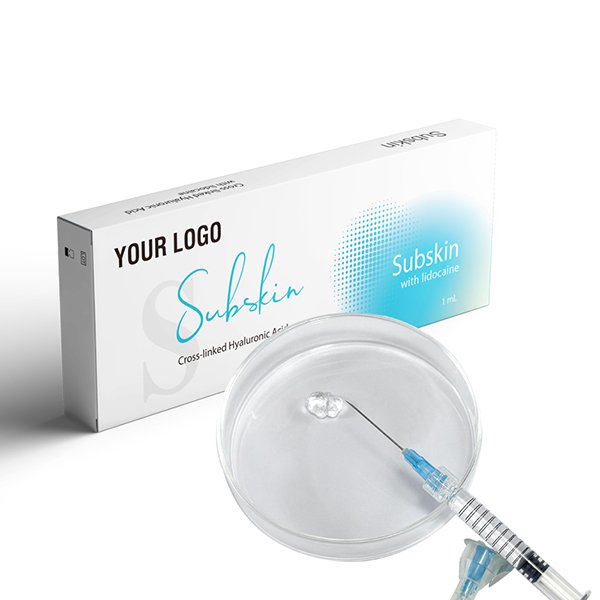
Hyaluronic acid is a sugar molecule naturally present in our skin, joints, and connective tissues, renowned for its incredible capacity to bind and retain water—up to 1,000 times its weight. In dermal fillers, HA is synthetically produced through biofermentation and then cross-linked to form a gel-like substance with varying degrees of viscosity and elasticity. This engineering is key to its use in jawline contouring.
Unlike fillers used for plumping lips or smoothing fine lines, jawline enhancement requires a product with high G-prime (elastic modulus) and cohesivity. Think of it as the difference between whipped cream and modeling clay. High G-prime fillers are robust, structured, and provide “lift” and support. When injected along the mandible, they work through several mechanisms:
- Structural Support and Projection: The primary action is to add volume directly to the mandibular border. Precise placement along the bone can enhance a weak chin, elongate a short jaw, or create a stronger angular definition from the earlobe down to the chin. This projects the jawline forward, restoring a more youthful skeletal framework.
- Tissue Integration and Hydration: Once injected, the HA gel integrates into the tissue. Its hydrophilic nature draws water, providing a hydrating effect that can improve skin quality. More importantly, it creates a supportive matrix that can subtly lift overlying sagging tissue, reducing the appearance of early jowling.
- Visual Rebalancing: A well-defined jawline acts as a counterbalance to the upper face. It can make the face appear more V-shaped or heart-shaped, which is often a sought-after aesthetic. It can also improve the appearance of a “double chin” or submental fullness by creating a clearer, tauter transition from the neck to the face.
The artistry lies in the injector’s deep understanding of facial anatomy—avoiding vital nerves and blood vessels—and their ability to use the filler as a tool to create a natural, tailored result that respects the individual’s unique bone structure.
The Treatment Journey: From Consultation to Contoured Result
Achieving a beautifully sculpted jawline with HA fillers is a meticulous process that hinges on expertise and personalized planning.
1. The Comprehensive Consultation:
This is the most critical step. A qualified medical professional (such as a dermatologist or plastic surgeon) will assess your facial anatomy, skin quality, bone structure, and aesthetic goals. They will examine where volume has been lost, where support is needed, and discuss the realistic outcomes. They may use imaging technology to simulate potential results. This is the time to address medical history, allergies, and medications like blood thinners.
2. The Procedure Itself:
On the day of treatment, the area is cleansed, and a topical numbing cream is often applied. Most modern HA fillers also contain lidocaine, a local anesthetic, to enhance comfort. Using a fine cannula or needle, the practitioner strategically deposits small amounts of filler in precise planes along and sometimes just above the mandibular bone. The cannula technique, which involves a blunt-tipped tube inserted through a single entry point, is often preferred for larger areas like the jawline as it may reduce bruising and allow for smoother, more even placement. The process typically takes 30 to 60 minutes.
3. Recovery and Results:
There is minimal downtime. Common immediate side effects include redness, swelling, tenderness, and potential bruising, which usually subside within a few days to a week. Initial results are visible immediately, but the final, settled outcome appears after 2-4 weeks as swelling fully resolves and the filler integrates. The practitioner may schedule a follow-up appointment at this point to assess the result and make any subtle touch-ups if necessary.
4. Longevity and Maintenance:
HA fillers in the jawline are semi-permanent. Due to the lower movement and denser tissue in the area, results typically last 12 to 24 months, significantly longer than in more mobile areas like the lips. Metabolism, product choice, and individual factors affect duration. Maintenance treatments can be performed to preserve the sculpted effect.
Data & Comparison: The Growing Preference for Non-Surgical Jawline Definition
The shift towards non-surgical facial contouring is not just anecdotal; it’s reflected in global aesthetic data. According to the 2023 report from the International Society of Aesthetic Plastic Surgery (ISAPS), soft tissue fillers (the vast majority of which are HA-based) remain the second most popular non-surgical procedure worldwide, with over 5.8 million treatments performed annually. While specific jawline filler statistics are often grouped under “facial contouring,” experts note a significant and growing segment dedicated to the lower face and jaw.
The following table outlines a comparison between surgical and non-surgical jawline enhancement:
| Feature | Surgical Jawline Enhancement (Implants/Lift) | Non-Surgical Jawline Enhancement (HA Fillers) |
|---|---|---|
| Invasiveness | Invasive surgery, general anesthesia often required | Minimally invasive, topical/local anesthesia only |
| Downtime | Significant, weeks for full recovery | Minimal, usually 24-72 hours for initial swelling |
| Results Timeline | Final results after months of healing | Immediate improvement, final results in 2-4 weeks |
| Longevity | Permanent (implants) or long-lasting (lift) | Semi-permanent (12-24 months) |
| Reversibility | Difficult and requires revision surgery | Reversible with an enzyme (hyaluronidase) |
| Customization | Fixed implant shapes; surgical changes are finite | Highly customizable, adjustable over time |
| Cost | Higher upfront cost | Lower per-session cost, but maintenance required |
| Risk Profile | Higher risk of surgical complications | Lower risk; typical side effects are bruising/swelling |
This data underscores why HA fillers have become a first-line option for those seeking improvement without the commitment, cost, or downtime of surgery.
Beyond the Jaw: Integrating Jawline Contouring into a Holistic Facial Strategy
The most natural and impactful results are achieved when the jawline is not treated in isolation. A skilled practitioner views the face as a dynamic, three-dimensional structure. Enhancing the jawline often goes hand-in-hand with complementary treatments to restore overall facial harmony:
- Cheek Augmentation: Adding volume to the mid-face can provide an upward lift, indirectly supporting the lower face and reducing the perceived heaviness in the jowls.
- Chin Augmentation: For patients with a receding chin, adding projection to the mental area is essential to create a continuous, strong line from ear to ear. The chin and jawline work as an aesthetic unit.
- Skin Tightening: Technologies like radiofrequency (e.g., Morpheus8) or focused ultrasound (e.g., Ultherapy) can be combined with filler to improve skin elasticity and enhance the tightening effect of the added structural support.
- Neuromodulators (e.g., Botox): Small doses placed in the masseter muscle (which bulks with teeth grinding) can slim the lower face, creating a more tapered contour that complements the newly defined jaw.
This synergistic approach ensures the outcome looks balanced, lifted, and naturally rejuvenated.
Professional Q&A on Hyaluronic Acid Jawline Fillers
Q1: Is jawline filler treatment painful?
Most patients report mild to moderate discomfort, described as a pressure or burning sensation. The use of topical numbing cream, fillers pre-mixed with lidocaine, and the skilled technique of the injector (often using a cannula) greatly minimize pain. Over-the-counter pain relievers (avoiding aspirin/NSAIDs pre-treatment to reduce bruising) can manage any post-procedural tenderness.
Q2: What are the main risks or complications?
Common, temporary side effects include swelling, redness, bruising, and tenderness. More serious but rare complications include vascular occlusion (where filler is inadvertently injected into a blood vessel), which can lead to tissue compromise. This underscores the critical importance of choosing a medically trained injector with expert knowledge of facial anatomy who knows how to prevent and manage such events. As HA fillers are reversible, any undesirable result or complication can be quickly addressed with hyaluronidase.
Q3: How do I choose the right provider?
Select a licensed medical doctor (board-certified dermatologist, plastic surgeon, or facial plastic surgeon) or a highly trained and supervised nurse practitioner/physician assistant specializing in facial aesthetics. Review their before-and-after portfolios specifically for jawline treatments. During the consultation, assess their knowledge, their approach to your facial anatomy, and their willingness to answer all your questions thoroughly. Do not prioritize cost over expertise for this advanced procedure.
Q4: Can fillers truly create a jawline if I don’t have one genetically?
Yes, to a significant degree. While fillers cannot change your underlying bone, they can add structure and projection along the mandible to create the visual impression of a stronger, more defined jawline and chin. For individuals with very weak bone structure or significant sagging, a combination of filler and skin-tightening energy devices may be recommended, and in some cases, surgery might still be the most effective long-term solution. A thorough consultation will determine the most appropriate approach for your anatomy.