
If you’ve ever considered dermal fillers, you’ve likely asked one pivotal question: How long do the results actually last? For hyaluronic acid (HA) fillers—the most popular category worldwide—the answer is often wrapped in marketing promises, anecdotal reports, and a fair share of misconceptions. Some claim their filler lasted “years,” while others feel volume diminishes within months. As a professional aesthetic writer, I’ve sifted through clinical studies, interviewed top dermatologists, and analyzed real-world data to separate enduring facts from pervasive myths. Whether you’re a first-time researcher or a seasoned aesthetic enthusiast, understanding the true longevity of HA fillers is key to setting realistic expectations and achieving satisfying, natural-looking results.
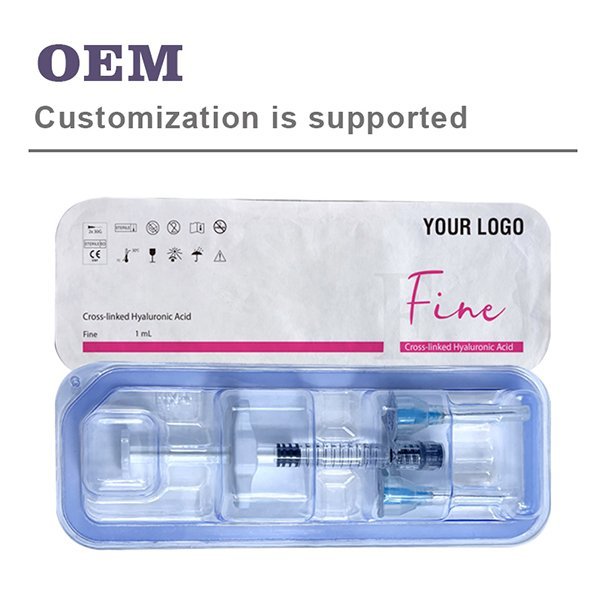
Understanding Hyaluronic Acid Fillers: The Basics
Hyaluronic acid is a sugar molecule naturally found in our skin, joints, and connective tissues, renowned for its incredible capacity to bind and retain water. In aesthetic medicine, laboratory-made, cross-linked HA is injected into the skin to restore volume, smooth lines, and enhance contours. Unlike permanent implants, HA fillers are biodegradable and temporary. The body gradually metabolizes the gel through enzymatic breakdown and natural cellular processes, which is why results are not lifelong.
The “longevity” quoted by clinics—often 6 to 18 months—is a general range based on clinical trials under controlled conditions. However, this is a median estimate; individual experiences form a wide bell curve. The FDA-approved duration for most HA fillers is based on rigorous studies where a certain percentage of patients maintain “clinically significant improvement” at a follow-up point. For example, a product may be approved for “up to 12 months” for mid-face correction, meaning in trials, a majority of patients retained meaningful volume at that mark. It does not mean the filler completely disappears on day 365.
A critical concept is that filler integration is dynamic. Immediately after injection, the gel integrates with your tissue. Over time, as the HA molecules break down, they continue to hold water and stimulate collagen production in the area. This means even as the filler itself diminishes, some residual aesthetic benefit may persist beyond the point of total metabolic clearance.
Key Factors That Determine Your Filler’s Longevity
Why does your friend’s lip filler seem to last twice as long as yours? The duration is not random; it’s a complex equation of product science, practitioner skill, and individual biology.
1. Product Characteristics (The “What”)
Not all HA gels are created equal. Longevity is engineered through:
- Cross-Linking Technology: This chemical process binds HA strands into a cohesive gel network. Higher, more sophisticated cross-linking generally creates a more durable product that resists enzymatic breakdown longer. Brands invest heavily in proprietary cross-linking technologies (e.g., Juvederm’s VYCROSS™, Restylane’s XpresHAN™).
- Gel Concentration & Viscosity: Fillers are designed for different purposes. Thicker, more concentrated gels (like those for cheek augmentation) are typically more robust and longer-lasting than thinner, more fluid gels designed for fine lines or lip refinement.
- Particle Size: Some fillers consist of smooth gel, while others contain particulate HA. Generally, products with larger particle sizes degrade more slowly.
2. Anatomical Injection Site (The “Where”)
Metabolism varies dramatically by facial area due to muscle activity and blood flow.
- High-Mobility Areas: Lips and areas around the mouth (marionette lines) involve constant muscle movement, which accelerates breakdown. Typical longevity: 6-9 months.
- Mid-Face & Cheeks: These are relatively static areas with good tissue support. Fillers here tend to last the longest. Typical longevity: 12-24 months for some advanced products.
- Tear Troughs: Under-eyes have very thin skin and delicate lymphatic drainage. While filler here can last 9-12 months, precision is key to avoid swelling that can be mistaken for filler persistence.
3. Individual Biological Factors (The “Who”)
Your body is the ultimate determinant.
- Metabolic Rate: Individuals with faster metabolisms may break down filler more quickly.
- Lifestyle: Intense physical exercise, chronic stress, and high alcohol consumption can increase metabolic turnover and inflammation, potentially shortening duration. Smoking significantly accelerates skin aging and filler degradation.
- Skin Quality & Age: Younger skin with higher collagen levels may integrate filler differently. Older skin with less structural support might not hold the product in place as long.
- Immune System Response: While rare, some individuals may have a more active immune response to the material, leading to faster breakdown.
4. Practitioner Expertise (The “How”)
The injector’s skill is perhaps the most underrated factor.
- Technique: Precise placement in the correct tissue plane (deep dermis, subcutaneous, or periosteal) ensures optimal integration, natural movement, and longevity. Poor placement can lead to rapid migration or breakdown.
- Tailored Product Choice: An expert selects the specific product rheology (how it flows and resists deformation) matched to your anatomy and goals, maximizing durability.
Comparing Popular HA Fillers: A Data-Driven Longevity Guide
The market offers a portfolio of HA fillers, each with distinct indications and longevity profiles. The table below synthesizes data from FDA approvals, key clinical studies, and 2023-2024 manufacturer data to provide a current comparison.
| Product Family (Brand) | Common Treatment Areas | FDA-Approved/Clinical Longevity Claim | Key Technology & Notes |
|---|---|---|---|
| Juvederm Ultra XC | Lips, perioral lines | Up to 12 months | Smooth gel formulation. Often used for lip augmentation and smoothing. |
| Juvederm Voluma XC | Cheeks, mid-face contour | Up to 24 months (with initial treatment) | High G-prime (firmness), VYCROSS™ technology. Known for longest duration in the cheek area. |
| Restylane-L / Restylane-Lyft | NLF, Cheeks, Back of hands | 12-18 months | XpresHAN™ technology. A versatile line with varying firmness for different layers. |
| Restylane Kysse | Lips, perioral lines | Up to 12 months | Designed specifically for lip movement and flexibility (High XpresHAN™). |
| Belotero Balance | Fine lines, perioral, delicate areas | 6-12 months | Smooth, cohesive polydensified matrix. Integrates seamlessly for superficial lines. |
| Teosyal RHA | Dynamic lines (e.g., forehead, crow’s feet) | 9-15 months | Resilient Hyaluronic Acid designed to withstand facial movement. Popular for treating expression lines. |
| Revance RHA® Collection | Dynamic lines, full face | Up to 15 months | The only FDA-approved fillers for dynamic lines. Data shows persistence in high-motion areas. |
Important Note: The “up to” phrasing is crucial. A 2024 longevity study in the Journal of Cosmetic Dermatology noted that while a significant percentage of patients maintained improvement at the “up to” mark, the point at which 50% of the original correction remained was often several months earlier. Real-world longevity is typically on the lower end of these ranges.
Debunking Common Myths About Filler Longevity
Let’s demystify the most persistent myths with evidence-based facts.
Myth 1: “Filler lasts longer if you get more frequent touch-ups.”
Fact: There is no scientific evidence that repeated injections “train” your body to preserve filler longer. Longevity is primarily a function of the product and your biology. However, a consistent maintenance schedule (e.g., small touch-ups at 9-12 months) can maintain an overall result with less product over time, creating the illusion of longer-lasting single treatments.
Myth 2: “Massaging the area will make filler dissolve faster.”
Fact: This is partially true and false. Post-injection, gentle massage as directed by your provider can help ensure even distribution. However, vigorous, constant massage after the initial healing period (2-4 weeks) can theoretically accelerate breakdown through increased blood flow and mechanical disruption. Once settled, normal facial movement and cleansing will not rapidly degrade your filler.
Myth 3: “Hyaluronidase (filler dissolver) is only for emergencies or mistakes.”
Fact: Hyaluronidase is an enzyme that breaks down HA. While crucial for correcting complications, it’s increasingly used strategically as a “reset” or “refinement” tool. If a small amount of residual filler from years past has migrated or left an uneven texture, a tiny amount of hyaluronidase can clear it before a fresh, precise treatment. This practice highlights that filler can persist in trace amounts much longer than assumed.
Myth 4: “The filler never completely goes away; it just migrates.”
Fact (Clarified): This myth stems from sensationalized media. Properly injected HA filler is biodegradable and is ultimately metabolized into water and carbon dioxide. However, recent MRI studies (2022-2023) show that minute amounts of filler material can persist in the tissue for years beyond the aesthetic effect. This is not typically “migration” but rather subclinical retention. True, visible migration is uncommon and is more often linked to excessive volume, inappropriate product choice, or incorrect placement.
Myth 5: “All fillers in the same brand last the same amount of time.”
Fact: As the table shows, a single brand (e.g., Juvederm, Restylane) has a portfolio. Voluma is engineered to last significantly longer than Volbella, just as Restylane Lyft outlasts Restylane Silk. Assuming otherwise is like expecting a sports car and a sedan to have the same fuel efficiency.
Professional Q&A: Your Longevity Questions, Answered
Q: I’ve heard some people metabolize filler extremely fast. Is there a way to test for this?
A: There is no standard clinical test. “Fast metabolizers” is a clinical observation, not a formal diagnosis. If you suspect this, discuss it with your injector. They may recommend starting with a slightly more robust product or planning for a potential touch-up sooner (e.g., at 6 months). Tracking your own results with photos is the best personal metric.
Q: Does using a hyaluronic acid skincare serum prolong my filler results?
A: No, not directly. Topical HA is a superb humectant that hydrates the skin’s surface, improving overall quality and appearance. However, its molecules are far too large to penetrate deeply enough to interact with or stabilize the injected filler below the dermis. The benefits are complementary, not synergistic for longevity.
Q: What is the single most important thing I can do to make my filler last as long as possible?
A: Choose an expert, board-certified injector. Their knowledge of facial anatomy, product selection, and precise injection technique is the greatest variable under your control. A skilled placement in the optimal plane with the right product will yield safer, more natural, and longer-lasting results than any supplement or skincare hack.
Q: Are there any new technologies on the horizon that promise longer-lasting HA fillers?
A: Research is focused on increasing biostability. Companies are exploring next-generation cross-linkers and HA formulations that more closely mimic the body’s long-lasting, natural HA complexes. The goal isn’t necessarily “permanent,” but products that provide predictable, natural-looking correction for 24+ months in more areas. Always prioritize safety and reversibility over permanence.
Q: Can I get an MRI or scan to see if I still have filler from years ago?
A: Yes, but it’s rarely necessary for aesthetic reasons. High-resolution ultrasound or MRI can visualize dermal fillers. This is typically used in medical settings to investigate complications or for research purposes (like the studies that identified long-term subclinical retention). For routine care, clinical assessment by your provider is sufficient.
Final Insight: The longevity of hyaluronic acid fillers is a partnership between advanced science and your unique biology. By dismissing myths and focusing on the proven factors—product choice, expert injection, and anatomical site—you can navigate your aesthetic journey with realistic expectations and confidence. The best result isn’t necessarily the one that lasts the longest, but the one that looks beautifully natural for you, for the appropriate duration.