
Introducción: Navigating the Evolving Landscape of Aesthetic Enhancements
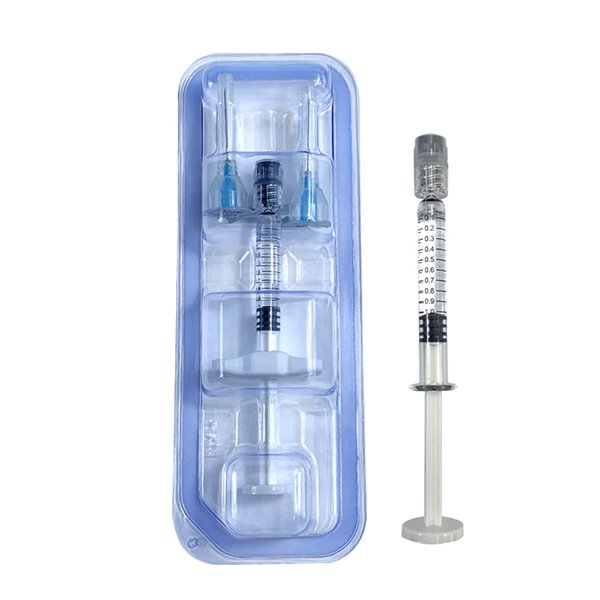
The world of cosmetic dermatology and aesthetic medicine is in a constant state of innovation, offering an ever-expanding array of solutions for those seeking facial rejuvenation. Two of the most significant and often discussed categories in injectable treatments are Ácido hialurónico (JA) Rellenos y Bioestimuladores. As we move through 2024, the choice between these options has become more nuanced, driven by advanced product formulations, a deeper understanding of facial aging, and personalized patient goals. This guide will provide a comprehensive, up-to-date comparison, empowering you with the knowledge to understand these treatments, their distinct mechanisms, and their ideal applications in the modern aesthetic toolkit.
Durante años, HA fillers have been the cornerstone of non-surgical facial contouring and wrinkle reduction. Sin embargo, the rise of biostimulators represents a paradigm shift—from simply “filling” lines to actively “revitalizing” the skin’s own structural foundations. Patients are no longer just asking for a quick fix; they are seeking natural-looking, long-term results that harmonize with their unique anatomy. Esta guía profundiza en la ciencia., datos, and practical considerations of both approaches, using the latest clinical insights and market trends from 2024 to clarify which option, or which combination, might be right for the evolving goals of aesthetic medicine.
Parte 1: Defining the Contenders – Mechanisms of Action and Evolution
Rellenos de ácido hialurónico: The Precision Artists
HA es una molécula de azúcar natural en nuestra piel que se une al agua., aportando volumen e hidratación. Commercial HA fillers are gels created through cross-linking technology, making them stable and longer-lasting once injected. Their mechanism is primarily volumetric y hydrative. They act like intelligent sponges, drawing water to the injection site to restore lost volume, pliegues suaves (como pliegues nasolabiales), enhance lips, and contour facial structures (mejillas, mentón). Their key characteristic is resultados inmediatos. The artistry lies in the injector’s skill to place the product with precision for a natural outcome. Además, a major safety advantage is their reversibility; an enzyme called hyaluronidase can dissolve the filler if necessary.
En 2024, the HA filler market has matured with a focus on reología personalizada—meaning products are engineered with specific elasticity (GRAMO') and viscosity to match different treatment areas. Por ejemplo, a firmer, more cohesive product is designed for deep cheek augmentation, mientras que un más suave, more fluid gel is ideal for fine lines or lip enhancement.
Bioestimuladores: The Collagen Architects
Bioestimuladores, also known as collagen biostimulators or collagen stimulators, work on a fundamentally different principle. Instead of adding direct volume, they act as a scaffold or stimulus to induce your body’s own collagen production over time. The most common active components are Ácido poli-L-láctico (PLLA – p.ej., escultura) y Hidroxiapatita de calcio (CAHA – p.ej., Radiesse). PLLA is a biocompatible, synthetic polymer that creates micro-trauma, triggering a neocollagenesis process. CaHA consists of microspheres suspended in a gel; the gel provides immediate volume, while the microspulates act as a scaffold for new collagen growth.
The results are not immediate. The process is gradual and progressive, typically unfolding over several weeks to months as new collagen forms. The outcome is often described as more “natural” y “global” skin thickening and tightening, addressing diffuse volume loss and skin laxity rather than isolated lines. En 2024, the conversation around biostimulators emphasizes their role in pan-facial rejuvenation y preventative aging strategies for younger patients looking to bolster skin quality early on.
Parte 2: Head-to-Head Comparison – Efficacy, Longevidad, and Ideal Applications
Choosing between HA fillers and biostimulators isn’t about which is “mejor,” but which is more appropriate for a specific concern. El 2024 approach is highly goal-oriented and often complementary.
| Característica | Ácido hialurónico (JA) Rellenos | Bioestimuladores (PLLA/CaHA) |
|---|---|---|
| Mecanismo primario | Physical filling & hidratación | Stimulation of endogenous collagen production |
| Time to Initial Result | Inmediato (visible after injection) | Demorado (semanas a meses; CaHA offers some immediate gel volume) |
| Result Nature | Preciso, localized volume correction | Difuso, skin-wide improvement in thickness, elasticidad, and overall firmness |
| Mejor para | – Static wrinkles & pliegues – aumento de labios – Contour enhancement (mejillas, línea de la mandíbula) – Under-eye troughs (with specific HA products) – Precise defect correction |
– Generalized volume loss (p.ej., templos, entire cheek area) – Skin laxity and thinning – Improving skin texture and quality – Body rejuvenation (p.ej., torneado, backs of hands) – “Prejuvenecimiento” |
| Duración del efecto | 6 a 24 meses, depending on product and area (p.ej., Los labios se metabolizan más rápido que las mejillas.). | 18 a 24+ meses for PLLA (effects can be very long-lasting). 12 a 18 meses for CaHA. Results are cumulative and can improve over time with treatment series. |
| Treatment Sessions | Often a single session achieves goal. Touch-ups maintain effect. | Typically requires a series of sessions (p.ej., 2-3 sessions spaced 4-8 weeks apart for PLLA) for optimal collagen build-up. |
| Key 2024 Tendencia | Micro-droplet technique for skin hydration, blended rheology for multi-layer treatment. | dosis baja, high-dilution protocols for subtle, natural collagen stimulation across the entire face. |
Synergistic Use in 2024: The most advanced treatment plans in 2024 frequently combine both. A practitioner might use a bioestimulador (como PLLA) to globally improve skin quality and provide a foundational collagen network, and then employ an relleno de HA for precise, targeted contouring and enhancement of specific features. Este “scaffold and sculpt” approach yields comprehensive, balanced results.
Parte 3: Safety Profiles, Efectos secundarios, and the Importance of Expertise
Both HA fillers and biostimulators are FDA-approved and considered safe when administered by qualified, experienced medical professionals. Sin embargo, their safety considerations differ.
HA Filler Safety:
Common immediate side effects include temporary redness, hinchazón, moretones, y sensibilidad en el lugar de la inyección. More significant, aunque raro, risks include oclusión vascular (if filler is accidentally injected into a blood vessel), which can lead to tissue compromise. This underscores the critical importance of the injector’s in-depth knowledge of facial anatomy. El reversibilidad with hyaluronidase is a paramount safety net. En 2024, there is an increased focus on ultra-long-lasting HA fillers and monitoring for late-onset inflammatory reactions, making choosing an experienced injector even more crucial.
Biostimulator Safety:
With PLLA and CaHA, the common side effects also include injection-site reactions. A unique consideration with PLLA is the potential for the formation of visible or palpable papules under the skin if not reconstituted, diluted, or injected correctly (using a deep depot technique and thorough post-treatment massage). Proper technique is non-negotiable. CAHA is typically not used in the lips due to its thicker consistency and risk of nodules. Neither biostimulator is reversible like HA filler; the body must metabolize the material over time.
The Non-Negotiable Factor: The Practitioner
For both categories, la habilidad, capacitación, and aesthetic eye of the injector are the greatest determinants of safety and satisfaction. En 2024, board-certified dermatologists and plastic surgeons are leveraging advanced imaging tools and personalized 3D planning to map out treatment strategies, minimizing risk and maximizing natural-looking outcomes.
Parte 4: Market Trends, Costos, and Making an Informed Decision in 2024
The aesthetic market in 2024 continúa viendo un crecimiento sólido. Data from the American Society of Plastic Surgeons and market analysts like Grand View Research suggest that while HA fillers still hold the largest market share due to their versatility and immediacy, the segment for biostimulators is growing at a faster annual rate, driven by demand for longer-lasting, natural-looking results that address skin quality.
Consideraciones de costos:
- Rellenos HA: Typically priced por jeringa. Costs can range from $600 a $1,200 per syringe depending on the product brand, ubicación geográfica, y la experiencia del proveedor. Multiple syringes may be needed for full treatment.
- Bioestimuladores: Also priced por jeringa, but since a treatment protocol usually involves a series (especially for PLLA), the total investment is often higher upfront. A vial of PLLA may cost $800-$1,000, and a full treatment series might require 2-3 vials.
While the initial outlay for biostimulators may be higher, patients increasingly view them as a inversión a largo plazo due to their multi-year duration. The cost-per-month over the treatment’s lifespan can become very competitive.
The Decision-Making Process:
Your consultation in 2024 should be a detailed dialogue. Be prepared to discuss:
- Your Primary Concerns: Are they specific lines and hollows, or overall skin laxity and thinness?
- Your Desired Timeline: Do you need results for an event next month, ¿O estás planeando una estrategia de rejuvenecimiento a largo plazo??
- Your Budget: Consider both immediate and long-term investment.
- Your Tolerance for a Process: Are you comfortable with gradual results requiring multiple sessions?
A top-tier provider will conduct a thorough facial analysis, discuss these factors, and may recommend a combination protocol to address multiple layers of the aging process effectively.
Q profesional&A: Your 2024 Injectable Questions Answered
Q1: I’m in my late 30s with early signs of volume loss in my cheeks and slightly thinning skin. I don’t want a “completado” mirar. Which approach is more suitable for me?
A: This scenario is a classic and growing indication for bioestimuladores en 2024. A treatment like PLLA (escultura) would be an excellent consideration. It works gradually to stimulate your own collagen, restoring foundational volume and improving skin thickness from within. The result is typically very natural, as it’s your own tissue being rebuilt. It addresses the “por qué” behind the volume loss rather than just masking it.
Q2: Can HA Fillers and Biostimulators be used in the same treatment session?
A: Sí, this is a common and powerful combination strategy used by expert injectors. The treatments can be complementary. Por ejemplo, a biostimulator like CaHA (Radiesse) might be used in the cheeks for collagen stimulation and some immediate volume, while a delicate HA filler is used to define the lips or smooth the nasolabial folds. The key is having a comprehensive plan and an injector who understands how to layer products for an optimal, harmonious outcome.
Q3: he oído hablar de “fatiga de relleno” o el “sobrellenado” mirar. Is this a risk with biostimulators as well?
A: El “sobrellenado” look is primarily associated with the incorrect or excessive use of HA fillers, often due to poor technique or chasing an unnatural aesthetic. Bioestimuladores, by their mechanism, are less likely to create this effect because they do not add significant direct volume. En cambio, they promote a diffuse improvement. Sin embargo, poor technique with biostimulators can lead to other issues, like visible nodules (with PLLA) or an uneven texture. This again highlights that the injector’s skill and restraint are more important than the product category itself.
Q4: What is the latest data on the longevity of these products? Are there any new advancements on the horizon for 2024-2025?
A: Recent longitudinal studies continue to support the long-lasting nature of biostimulators, with PLLA showing effects for up to 3+ years in some patients. For HA fillers, new cross-linking technologies are pushing the durability of some products toward the 18-24 month range. On the horizon, we are seeing research into next-generation biostimulators with more controlled degradation profiles and bio-integrative HA fillers designed to more seamlessly interact with native tissue. Además, el uso de AI-assisted facial analysis tools is becoming more prevalent to personalize treatment plans with unprecedented precision, helping to determine the exact ratio and placement of HA fillers and biostimulators for an individual’s facial geometry and aging pattern.
Descargo de responsabilidad: This guide is for informational purposes only and does not constitute medical advice. The field of aesthetic medicine evolves rapidly. Always seek a consultation with a qualified, board-certified dermatologist or plastic surgeon to discuss your individual needs, historial medico, and the most appropriate, up-to-date treatment options for you.