
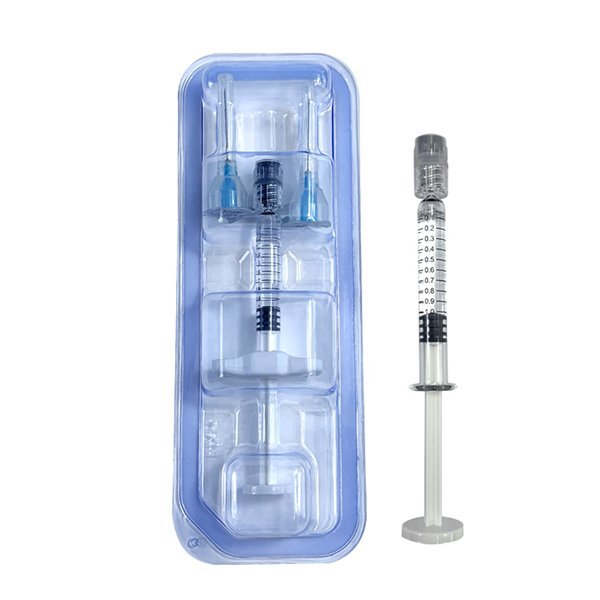
Skin Filler Supplier’s Guide to the B2B Power of Monophasic HA Gel
Let’s talk about monophasic HA gel not just as a dermal filler, but as your next high-margin, high-demand inventory line. For B2B distributors and clinic suppliers, understanding this product is about understanding a key driver in the aesthetic device and consumables market. It’s the workhorse. We’re cutting straight to the data and applications that matter for your business.

The Monophasic Advantage: Consistency Equals Reliability
From a sourcing and supply perspective, monophasic HA gel’s single-phase, homogeneous structure is its biggest commercial advantage. Unlike biphasic gels (which have particulate matter suspended in a gel), monophasic is one cohesive fluid. What does this mean for you, el distribuidor? Fewer complications mean higher client (the clinics) satisfaction and fewer product-related complaints. It translates to predictable viscosity and flow characteristics, ensuring every syringe from the production batch performs identically. For practitioners, this means smooth injection, even tissue integration for natural-looking volume, and primarily, it’s trusted for its lifting capacity – think nasolabial folds, líneas de marionetas, and cheek augmentation. It’s the go-to for structural rejuvenation. The latest market analysis indicates that monophasic HA products command approximately **60-65%** of the global hyaluronic acid filler volume share, precisely due to this reliability in corrective and lifting treatments.
Global Market Pulse: The Data Behind the Demand
Your inventory decisions need real numbers. El mercado mundial de rellenos dérmicos no sólo está creciendo; se esta acelerando. As of the latest quarter, the hyaluronic acid segment dominates, aguantando **85%** of the total filler market. Driven by an aging demographic, rising disposable income in emerging markets, and minimally invasive treatment trends, the compound annual growth rate (CAGR) is projected at **9-11%** for the next five years. North America and Europe remain revenue leaders, but the Asia-Pacific region is the growth engine, with countries like China, Corea del Sur, and India seeing year-on-year increases exceeding **15%**. Para exportadores, this signals not just one, but multiple booming channels. Here’s a snapshot of key regional dynamics:
| Región | Cuota de mercado (2024 Est.) | Impulsor clave del crecimiento | Característica de relleno preferida |
|---|---|---|---|
| América del norte | ~35% | Preventative Treatments in Younger Demographics | Sol alto, High Lifting Capacity |
| Europa | ~30% | Established Medical Aesthetic Culture | Longevidad & Perfil de seguridad |
| Asia-Pacífico | ~28% | Rapid Clinic Expansion & Medical Tourism | Natural, Subtle Enhancement & Hidratación |
| Rest of World | ~7% | Increasing Market Access | Cost-Effectiveness & Estabilidad |
Targeted Applications: Your Clinic Clients’ Use Cases
Your clients – dermatologists, cirujanos plasticos, and aesthetic clinics – need products that solve specific problems. Frame monophasic HA gel around these core applications: **Deep Volume Replacement and Structural Lifting.** It’s ideal for the mid-to-deep dermis. Key injection sites include the cheeks to restore malar volume, the chin for augmentation, and the jawline for contouring. It’s also the primary choice for correcting severe nasolabial folds. The technique clinics use is crucial: it’s often deployed via a linear threading or fanning technique for broad area coverage, or as a bolus for deep volume. The trend moving into 2024 is **combination therapy** – using a monophasic gel for structure and a softer, biphasic or cohesive gel for fine lines. This creates a bundled service opportunity for clinics, and thus a bundled product sale for you.
Supply Chain and Compliance: The B2B Essentials
Sourcing this category isn’t just about price per unit. You must verify your manufacturer’s compliance with **ISO 13485** (medical devices quality management) and relevant regional certifications like **CE Mark** (UE), **FDA approval/clearance** (A NOSOTROS), or **NMPA certification** (Porcelana). The shelf life, típicamente 24-36 meses, and storage conditions (room temperature vs. refrigerated) directly impact your logistics costs and inventory management. Post-market surveillance data from the manufacturer is a key differentiator; it demonstrates a commitment to safety and provides you with evidence-based selling points. Para exportadores, staying updated on **REACH (UE)** and **RoHS** regulations for chemical substances is non-negotiable to avoid customs or regulatory delays.
Monophasic vs. bifásico: The Strategic Product Mix
To serve your clinic customers fully, you need a portfolio. Here’s the breakdown. Monophasic gels are **cohesive**. They lift and project. Biphasic gels are **cohesive and dispersive**. They integrate and spread. A clinic will use monophasic for the cheeks and jawline, and might choose a biphasic for the lips or superficial dermal blending. The current market demand shows a **70/30 split** in volume towards monophasic for foundational treatments, but biphasic remains critical for specific indications. The smart strategy is to offer both, positioning your monophasic range as the premium, structural solution. Demand for high G’ (módulo elástico) monophasic gels is particularly strong, as they provide that immediate, noticeable lift practitioners and patients want.
Q profesional&A
q: Para un nuevo distribuidor, what is the minimum recommended product range for monophasic HA fillers?
A: Start with a versatile portfolio covering three key viscosities: 1) A high G’ product for deep lifting (mejillas, mentón), 2) A medium G’ product for moderate folds (nasolabial), y 3) A product with integrated lidocaine for patient comfort. This covers ~80% of core clinic needs.
q: How critical is cross-linking technology, and what should we tell our clients about it?
A: It’s fundamental. Cross-linking density determines product longevity and resistance to degradation. Higher cross-linking typically means longer duration (12-18 meses) and greater lifting capacity. Provide clients with the manufacturer’s data on cross-linking agent (p.ej., BDDE) residue levels, con <0.5 ppm being the industry safety benchmark.
q: What are the top three regulatory documents we must obtain from our manufacturer?
A: 1) **Certificado de Análisis (CoA)** por cada lote, 2) **ISO 13485 Certificate** of the production facility, y 3) **Biocompatibility Test Reports** (per ISO 10993 series) for the finished product. These are mandatory for responsible B2B distribution.