
¿Cuánto duran los rellenos de ácido hialurónico?? Duración y factores
ácido hialurónico (JA) Los rellenos se han convertido en uno de los tratamientos cosméticos no quirúrgicos más populares a nivel mundial., apreciado por su capacidad para restaurar el volumen, suavizar las arrugas, y mejorar los contornos faciales con un tiempo de inactividad mínimo. Una pregunta crítica para cualquiera que esté considerando este tratamiento es: how long do the results last? While often marketed as lasting 6 a 18 meses, the reality is more nuanced. The duration of HA fillers is not a fixed number but a variable influenced by a complex interplay of product science, técnica de inyección, and individual patient biology. Understanding these factors is key to setting realistic expectations and achieving satisfying, long-lasting results. This article delves deep into the science behind filler longevity, analyzes the latest data, and provides a comprehensive guide to what determines how long your hyaluronic acid filler will last.
The Science of Hyaluronic Acid and Why It Eventually Degrades
To understand duration, we must first understand the substance. El ácido hialurónico es una molécula de azúcar que se encuentra naturalmente en toda nuestra piel., articulaciones, y ojos, where it binds to water to provide hydration and volume. Naturally occurring HA has a very short lifespan—just a day or two before the body breaks it down and replaces it.
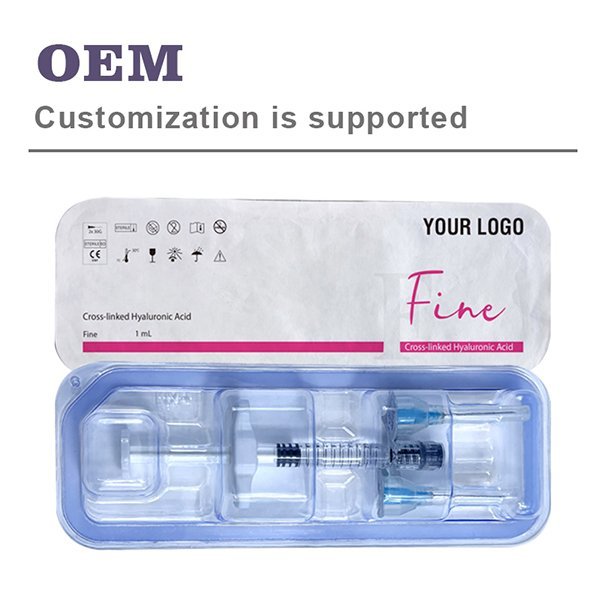
Dermal fillers use cross-linked HA. To create a product that provides structural support for months, manufacturers chemically “enlace cruzado” the HA molecules. This process bonds the individual chains into a robust, red tipo gel. The degree and type of cross-linking are proprietary secrets for each brand and are the primary determinants of a product’s viscosidad (thickness) y elasticidad (ability to stretch and rebound).
Degradation is a Two-Part Process:
- Chemical Degradation (hialuronidasa): Your body naturally produces an enzyme called hyaluronidase, whose job is to break down HA. Con el tiempo, this enzyme gradually breaks the cross-linked bonds, reducing the filler gel into smaller components that are naturally metabolized.
- Mechanical Integration: As the filler is placed, se integra en el tejido. With movement and facial expressions, the gel network slowly disperses and integrates further, which can soften its initial volumizing effect.
El “duration” quoted by clinicians typically refers to the period during which a clinically visible effect remains—not the complete disappearance of the product. Trace amounts may persist beyond the visible result.
Comparing Durability: A Data-Driven Look at Major HA Filler Brands
No todos los rellenos de HA son iguales. Different products are engineered with unique particle sizes, tecnologías de reticulación, and concentrations for specific treatment areas. These engineering choices directly impact longevity. The table below synthesizes data from manufacturer clinical studies, FDA submissions, and peer-reviewed journals to provide a realistic overview.
| Marca de relleno (Generic Name) | Características clave & Mejor para | Typical Marketed Duration | Clinical & Real-World Data (Residencia en 2023-2024 Estudios) |
|---|---|---|---|
| Juvederm Voluma XC (JA) | Sol alto, viscous. aumento de mejillas, aumento de mentón. | Arriba a 24 meses | Consistently shows the longest duration. Studies indicate ~80% of patients maintain improvement at 18 meses, with many seeing results for 2 años. |
| Restylane Lyft (JA) | Cohesivo, large particles. mejillas, mid-face contouring. | 12-18 meses | Robust data supporting 12-18 month duration for cheek augmentation. Often used as a comparator in longevity studies. |
| Juvederm Ultra XC / Restylane-L | Medium particle size, balanced flow. Moderate to severe wrinkles (p.ej., pliegues nasolabiales). | 10-12 meses | El “caballo de batalla” fillers for folds. Systematic reviews confirm a median duration of 10-12 months for nasolabial fold correction. |
| Belotero Libra (JA) | Sol bajo, highly integrable. Fine superficial lines, perioral. | 6-12 meses | Engineered to integrate smoothly into superficial skin. Duration for fine lines is often 6-9 meses, as the area is highly mobile. |
| Teosyal RHA系列 (p.ej., RHA 2,3,4) | Resiliente, non-crosslinked HA. Dynamic areas (labios, marionetas). | 9-15 meses | Specifically designed for movement. RHA 4 for deep folds shows data supporting results beyond 12 months due to its resistance to mechanical forces. |
Key Takeaway: For deep volumizing (mejillas, mentón), sol alto’ fillers like Voluma last the longest (18-24 meses). For lips and highly mobile areas, even well-formulated products may last 6-12 months due to constant mechanical stress.
El 5 Key Factors That Determine How Long Your Filler Lasts
While product choice is crucial, individual factors often play an equal or greater role in determining longevity.
1. Metabolic Rate and Individual Biology: This is the most unpredictable factor. Individuals with faster metabolisms may break down HA fillers more quickly. Lifestyle factors like high levels of physical activity, which can increase metabolic rate, may contribute to slightly faster degradation. Genetics also influence natural hyaluronidase production levels.
2. Treatment Area and Muscular Activity: Areas with intense, repetitive muscle movement experience more mechanical breakdown of the filler product.
- Shortest Duration: Labios (constant talking, eating, expression) y Perioral Area (alrededor de la boca). Expect 6-9 months for most products.
- Moderate Duration: Pliegues nasolabiales (sonriente) y Líneas de marionetas. Típicamente 10-12 meses.
- Longest Duration: mejillas, Mentón, templos. These are relatively static areas. High-viscosity fillers here can last 18-24 meses.
3. Injection Technique and Practitioner Expertise: An expert injector profoundly impacts longevity.
- Depth of Injection: Placing the product in the correct anatomical plane (deep dermal vs. subdermal) ensures optimal integration and stability.
- Elección de producto: A skilled practitioner matches the correct product’s physical properties (GRAMO', elasticidad) to the treatment goal and area.
- Minimizing Trauma: Precise technique with minimal tissue trauma can reduce swelling and inflammation, which may indirectly slow the early breakdown of the product.
4. Estilo de vida y factores ambientales:
- Exposición al sol: Chronic, unprotected UV exposure accelerates the degradation of both your natural collagen/HA and the injected filler by creating inflammatory free radicals.
- De fumar: Significantly reduces skin health and longevity of treatments by impairing circulation and increasing inflammation.
- Extreme Heat/Saunas: While occasional use is likely fine, frequent exposure to intense heat (p.ej., daily hot yoga, saunas) may theoretically increase blood flow and metabolism in the area, potencialmente acortando la duración.
5. El “Maintenance Effect” and Touch-Up Sessions: This is a critical, often overlooked concept. Initial treatments often require more product to establish a new structural baseline. Hacer un seguimiento “retoque” sessions at 4-8 weeks can perfect the result. Once the desired volume/contour is achieved, subsequent maintenance treatments (often with less product) are needed to maintain that result, not rebuild it from scratch. This can extend the overall perception of longevity and may be more cost-effective over time.
How to Prolong Your Hyaluronic Acid Filler Results: An Evidence-Based Guide
Maximizing your investment involves proactive pre- and post-care, as well as strategic treatment planning.
-
Pre-Treatment Optimization: Ensure your skin is healthy. A consistent skincare regimen with broad-spectrum SPF 30+ a diario, antioxidantes (vitamina c), and retinoids can improve skin quality and may create a better environment for the filler. Avoid blood-thinning medications/supplements (según lo aconsejado por su proveedor) to reduce bruising.
-
Atención posterior al tratamiento (La primera 2 Semanas): This is the critical stabilization period. Evite el ejercicio extenuante, calor excesivo, y alcohol para 24-48 hours to minimize swelling. Gentle massage only if directed. Be diligent with sun protection.
-
Long-Term Maintenance Strategies:
- Sun Protection is Non-Negotiable: Daily mineral-based sunscreen is the single most effective thing you can do to protect your skin and your filler investment.
- Combination Therapy (El “Multi-Modal” Approach): Pairing HA fillers with other modalities can enhance and prolong overall results. SkinBoosters (injectable low-dose HA for hydration) mejorar la calidad de la piel, making filler results look more natural. Energy-based devices como frecuencia de radio (Morfeo8) o ultrasonido (Ulterapia) stimulate native collagen, providing a supportive “scaffold” that can help sustain the filler’s lift.
- Follow a Strategic Touch-Up Schedule: Don’t wait until all the filler is gone. Plan a minor maintenance session at 9-12 months for mobile areas or 12-18 months for static areas to sustain the effect seamlessly.
Latest Trends & Datos: What’s New in Filler Longevity (2024 Update)
The field is rapidly evolving with a focus on longer-lasting, more natural products and personalized approaches.
- Next-Generation HA Technologies: Newer fillers, like the RHA (Ácido hialurónico resistente) collection and Juvederm Volux, are engineered with a focus on flexibility and resistance to dynamic forces. Real-world data is confirming that these can indeed offer extended duration in mobile areas, with some studies showing high patient satisfaction at 15 months for lip and perioral treatments.
- Personalized Medicine in Aesthetics: The future lies in tailoring treatments based on individual factors. Some clinics now use AI imaging analysis to predict aging patterns and recommend specific product combinations for optimal, long-lasting structural correction rather than just treating isolated lines.
- The Rise of “Bio-Remodeling” Treatments: Treatments like escultura (PLLA), which stimulate your own collagen over months, are being used strategically alongside HA fillers. The HA provides immediate volume, while the collagen stimulator builds a long-lasting foundation, potentially reducing the total amount and frequency of HA needed over time.
Q profesional&A: Your Hyaluronic Acid Filler Longevity Questions Answered
q: Can I make my filler last longer by getting more units injected in one session?
A: Not necessarily. There is an optimal amount for each area based on anatomy and skin laxity. Overfilling can lead to an unnatural look, increased swelling, and potentially faster migration or breakdown due to excessive pressure in the tissues. The best approach is a conservative initial treatment followed by a planned touch-up.
q: Is there a test to see if I’m a “fast metabolizer” of fillers before my first treatment?
A: There is no commercially available clinical test. Your provider will make an assessment based on your age, estilo de vida, and skin quality. The most reliable indicator is your personal history with previous filler treatments. Communicating your past experiences with your injector is vital for planning.
q: Do certain skincare ingredients, like hyaluronidase-based products, break down filler faster?
A: Topical skincare products do not contain the enzyme hyaluronidase, which is a prescription-only injectable used to dissolve filler. Sin embargo, high-concentration retinoids or chemical exfoliants (AHAs/BHAs) can increase skin cell turnover. While they won’t directly break down deep filler, they can temporarily affect the hydration of the very top layers of skin. It’s generally advised to pause these for a few days pre- and post-treatment to avoid sensitivity.
q: What does the latest data say about the real-world average longevity of lip fillers?
A: A 2023 systematic review in the Revista de Cirugía Estética concluded that for lip augmentation, el median duration of clinically noticeable effect is 6-8 meses for most HA products. Patient satisfaction often begins to decline after the 6-month mark, which is why many opt for maintenance treatments every 6-9 months to sustain full, defined lips.
q: Are there any new treatments on the horizon that could last longer than current HA fillers?
A: Research is ongoing into longer-lasting biocompatible materials. policaprolactona (PCL)-based fillers like Ellansé, already available in many markets, offer a duration of 1-4 years depending on the formulation, as they stimulate both an immediate HA gel effect and a long-term collagen response. Sin embargo, HA remains the gold standard due to its reversibility and safety profile. The focus for HA is on improving its performance within its established safety window, not necessarily making it permanent.