
The Core Machinery: What OEM Korea Filler Really Means for Your Business
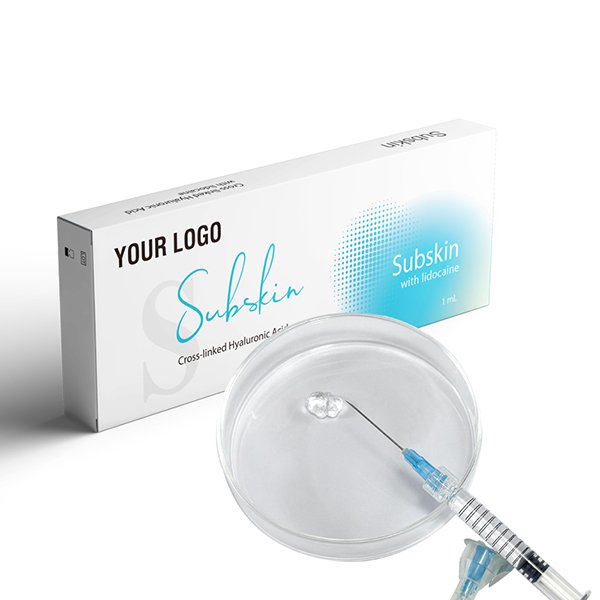
Let’s cut straight to the chase. When you see “OEM Korea Filler,” you’re not just looking at a product; you’re looking at a specific, powerful segment of the global beauty supply chain. OEM stands for Original Equipment Manufacturer. In our world—the aesthetics and dermatology industry—it means a Korean-based factory that designs and produces dermal fillers to be branded and sold by another company. That company could be you. Think of it as the behind-the-scenes engine room. The Korean factory handles the complex biochemistry, the stringent manufacturing, the quality control, and the regulatory groundwork. You, as a distributor or brand owner, bring your label, your marketing, and your access to your local market. The final product is your brand, but its DNA, its efficacy, and its safety profile are born from Korean R&D and production expertise. This model is why Korea has become the global epicenter for OEM fillers. It’s a confluence of cutting-edge technology, decades of focused research in biotech and cosmetics, and a manufacturing culture built on precision and rapid innovation cycles. For a B2B buyer, this translates to a critical advantage: you can launch a competitively superior product without investing tens of millions in your own bio-lab and production facility.
Beyond the Syringe: The Multi-Industry Demand Driving OEM Production
To understand the scale of the OEM Korea filler market, you need to look beyond the cosmetic clinic. The demand is being fueled by parallel industries converging on this technology.
- The Aesthetic Medical Distributor: This is the core channel. You’re supplying hyaluronic acid fillers, PLLA-sculptra, PMMA, and other advanced polymers to dermatologists, plastic surgeons, and medical spas.
- The Global Beauty & Wellness Brand: Major cosmetic brands are moving into the “medical aesthetics” or “cosmeceutical” space. They leverage Korean OEMs to create their own line of fillers, bridging the gap between over-the-counter skincare and in-clinic procedures.
- The Telemedicine & Platform Integrator: New health-tech platforms aggregating aesthetic services are creating their own proprietary product lines to ensure quality control and boost margins across their network of providers.
- The Pharmaceutical Distributor: Traditional pharma companies are expanding portfolios to include medical aesthetics, using OEM partnerships as a fast-track entry into the high-growth filler market.
This cross-industry pull creates a robust, innovation-driven OEM ecosystem. Factories aren’t just producing one standard formula; they’re developing specialized solutions—fillers with higher G’-prime for structural lifting, softer blends for fine lines, or integrated anesthetic (lidocaine) for patient comfort—to meet these diverse B2B needs.
The Strategic Playbook: Why Smart Distributors are Sourcing from Korea
Sourcing OEM fillers from Korea isn’t just a purchasing decision; it’s a strategic market positioning move. Here’s the breakdown of the tangible benefits that impact your bottom line and market share.
Speed to Market & Innovation Velocity: Korean filler labs operate on a famously fast iteration cycle. When a new trend emerges—say, bio-revitalization or skinboosters—OEMs often have a developed, stable formula ready for branding within a remarkably short timeframe. This allows you to launch trend-aligned products 12-18 months faster than if you developed them in-house or sourced from slower-moving regions.
Unmatched Cost Structure for Scale: The concentrated infrastructure and high-volume production in Korea create significant economies of scale. For a distributor, this means your Cost of Goods Sold (COGS) remains highly competitive, protecting your margin while allowing flexible pricing strategies in your home market. The initial per-unit cost might be similar to other regions, but the value—in terms of quality, consistency, and packaging—is typically far superior.
The “K-Beauty” Premium & Trust: “Made in Korea” carries immense weight in aesthetics. It signals advanced technology, safety, and a focus on natural-looking results. This built-in brand equity reduces your customer education cost. A dermatologist in Europe, the Middle East, or Southeast Asia immediately associates Korean fillers with a certain caliber of quality, making your sales process more about your specific service and support than basic credibility.
Regulatory Roadmap Expertise: Leading Korean OEMs have deep experience navigating complex regulatory pathways, from Korea’s own strict MFDS (Ministry of Food and Drug Safety) approvals to supporting CE Marking (for Europe) and understanding the framework for other regions. A strong OEM partner doesn’t just give you a product; they provide a dossier of technical files, safety data, and clinical reports that is critical for your own local registration processes.
Customization Depth: This goes beyond slapping your logo on a standard syringe. True OEM partnerships allow for:
- Formula adjustments (viscosity, cross-linking degree, particle size).
- Needle gauge and length specifications.
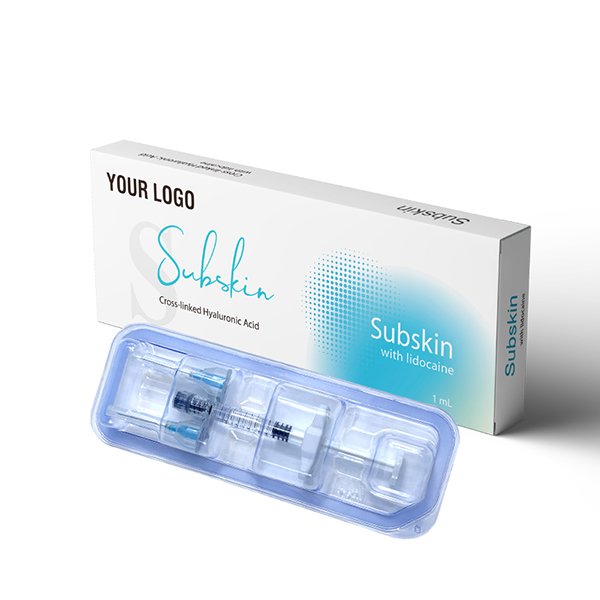
- Custom primary packaging (syringe design) and secondary packaging (box design).
- Tailored blend development for specific demographic needs (e.g., fillers optimized for different skin densities prevalent in your target regions).
Key Market Data: The OEM & Filler Landscape (2024 Estimates)
| Metric | Data | Implication for B2B Distributors |
|---|---|---|
| Global Dermal Filler Market Size | ~$7.2 Billion | The core market is large and growing, indicating room for branded competition. |
| Projected CAGR (Next 5 Years) | 9-11% | High growth sector justifies investment in building a private label line. |
| Korea’s Share of Global OEM Supply | Estimated >65% | Dominant position ensures stable supply, competitive pricing, and continuous R&D. |
| Average OEM MOQ (Minimum Order Quantity) | 5,000 – 50,000 units | Varies by factory; scalable entry points for both new and established distributors. |
| Time from Concept to Shipped Product | 4-9 months | Includes formulation lock, biocompatibility testing, batch production, and branding. |
| Core Regulatory Certifications of Top OEMs | ISO 13485, MFDS, CE, FDA-registered facility | Non-negotiable for mitigating your supply chain risk and ensuring market access. |
Navigating the Partnership: From Inquiry to Delivery
Finding the right OEM is a due diligence process. You’re not just buying a product once; you’re entering a multi-year logistical and technical relationship. Start by auditing the factory’s credentials: MFDS certification is a baseline for Korean production. ISO 13485 for medical devices is mandatory. Ask for a list of countries where their fillers are currently marketed—this reveals their regulatory experience. Demand a transparent tour of their R&D process and quality control labs. What are their sterility assurance protocols? How is the hyaluronic acid sourced (non-animal stabilized vs. other)? Discuss their capacity for stability testing (shelf-life studies) and batch release documentation.
Next, define your needs clearly. Are you looking for a versatile HA filler range, or a specialized product like a PLLA collagen stimulator? What is your target price point? What are the labeling and language requirements for your markets? Be prepared to discuss realistic minimum order quantities and lead times. The best OEMs will act as consultants, advising you on market trends in your region—for instance, the rising demand for cannula-packed fillers in certain markets or the preference for higher concentration skinboosters.
Logistics are critical. Fillers are temperature-sensitive biocompatible medical devices. Your OEM must have a proven, reliable cold-chain shipping solution with full traceability. Incorrect handling during transit can ruin an entire batch. Ensure your contract clearly outlines responsibilities for quality assurance, liability, post-market surveillance support, and protocol for the extremely rare event of a batch-related issue.
Professional Q&A for Distributors
Q: What is a realistic minimum order quantity (MOQ) for a custom OEM filler line, and does it vary by product type?
A: MOQs are negotiable but typically start between 5,000 to 10,000 units per SKU for standard hyaluronic acid fillers for a new partnership. More complex products like PLLA or calcium hydroxylapatite fillers may have higher MOQs due to more intricate production. Established relationships often allow for lower re-order MOQs. Factories prefer committed partners, so be clear about your launch plan and projected growth.
Q: How do Korean OEMs ensure their fillers are suitable for diverse ethnicities and skin types globally?
A: Leading OEMs incorporate this into R&D. They study rheological properties (like G’ and G”) to tailor product performance for different skin densities—often higher cohesion and elasticity for structural support in areas where thicker skin is common. They provide a portfolio, advising distributors on which filler from their range is best suited for, say, fine-line treatment in Caucasian skin versus mid-face volumizing in Asian skin, based on clinical feedback and viscosity data.
Q: We are concerned about regulatory approval in our country. What level of support can we expect from the OEM?
A: A top-tier OEM provides a essential “Technical File” or “Design Dossier” that includes full manufacturing details, biocompatibility test reports (ISO 10993), sterility validation, and often clinical study data. This is the core documentation your local regulatory agent will need to submit. They do not typically file for approval in your country for you (as that requires a local entity), but they are the indispensable source of the technical data. Some offer regulatory consultation services for an additional fee.
Q: Beyond hyaluronic acid, what are the next big ingredient trends in Korean OEM pipelines?
A: The focus is on longer duration and regenerative effects. Expect more advanced PLLA (Poly-L-Lactic Acid) formulations that are smoother and easier to administer, PCL (Polycaprolactone)-based fillers for collagen stimulation, and next-generation HA hybrids that combine HA with peptides, antioxidants, or other bioactive molecules for enhanced skin quality improvement. The goal is moving from simple volume replacement to bioactive tissue remodeling.