
H2: Beyond the Syringe: How Private Label Fillers Build Unbreakable B2B Ecosystems
Let’s cut straight to the point. As a distributor, you’re not just moving boxes from Point A to Point B. You’re building a brand, a reputation, and a legacy. Stocking generic, widely available filler brands turns you into a commodity broker in a market that increasingly values uniqueness and control. Private label fillers are your direct ticket out of the price-war basement and into the boardroom of strategic partnership. This isn’t just about skincare; it’s about the fundamental business models in tech, fashion, and consumer goods applied to aesthetic medicine. The most successful modern companies, from Trader Joe’s to Shopify, own their supply chain narrative. Your distribution business should be no different. Private labeling is how you stop selling someone else’s story and start commanding the narrative in your region, with your margins, and on your terms.
H2: The Margin Multiplier & Market Agility Engine

Talk is cheap; spreadsheets aren’t. Here’s where private label moves from concept to bankable reality. Sourcing fillers under your own brand fundamentally rewrites your profit equation.
| Metric | Generic/Branded Filler Distribution | Private Label Filler Distribution | Real-Time Data Insight (2024) |
|---|---|---|---|
| Gross Profit Margin | Typically 15-30%, heavily squeezed by MSRP and competitor undercutting. | 50-70%+ is standard. You control the pricing tier, eliminating margin compression from the brand owner. | A 2023 distribution survey showed B2B buyers are 40% more likely to choose a supplier offering exclusive products, even at a 20% premium, for long-term security. |
| Price Control & Stability | None. The manufacturer sets MAP (Minimum Advertised Price), and market floods dictate your final sell price. | Complete autonomy. You set prices based on your market’s willingness to pay, competitive positioning, and value-added services. | Post-pandemic volatility in global shipping has made predictable costing vital. Private label contracts with fixed costs provide insulation against market whims. |
| Inventory & Portfolio Agility | You’re stuck with the brand’s R&D cycle and stock list. Adding a new formulation takes ages. | You dictate the portfolio. See a surge in demand for a specific hyaluronic acid density or a novel Lidocaine ratio? You can partner with your manufacturer to develop and launch it in 2-3 quarters, not years. | Data from Alibaba B2B trends indicates a 65% increase in “customizable” and “private label” searches in the medical aesthetics category since 2022. |
This agility is your superpower. When a new trend emerges—say, bio-stimulatory fillers or specific cannula formulations—you’re not waiting for a multinational to decide if your region is important. You work with your trusted manufacturer to bring a compliant, market-ready product to your clients faster than anyone else. You become the trendsetter, not the follower.
H2: From Distributor to Strategic Partner: Owning the Client Relationship
When you sell Dr. X’s clinic a bottle of “Brand A” filler, your relationship is transactional. The brand owns the loyalty. If a competitor offers “Brand A” for $2 less, you’re in a weak position. Private label flips this script. The product is yours—”EliteDerm Voluma” or “AestheticPro Contour.” The clinic’s success, their patient satisfaction, their entire aesthetic outcome, is now intrinsically linked to your brand. You’re not a delivery service; you’re a solutions provider.
This allows for deeper integration. You offer tailored training on your products’ unique rheology. You create treatment protocols specific to your formulations. You build a continuing education ecosystem around your brand. This creates staggering client stickiness. Switching suppliers for a clinic now means retraining staff, changing consultation materials, and potentially disrupting patient outcomes—a switch they are highly unlikely to make for minor cost savings. You’ve moved the competition from price to partnership, and that’s a battle you can dominate.
H2: Compliance as a Competitive Moat, Not a Checkbox
For the global B2B dealer, regulatory compliance is the bedrock. A private label partnership with a premier Chinese manufacturer like us isn’t just about filling vials; it’s about accessing a rigorous compliance framework. The landscape is tightening globally: the EU MDR, varying FDA pathways, and ASEAN Medical Device Directives are creating complex market entry barriers. A serious private label partner provides you with a complete regulatory toolkit—detailed Dossiers, ISO 13485 certified manufacturing audits, CE certification support (for Class IIb/III devices), and stability studies.
This transforms compliance from a cost center into your most powerful sales asset. You can confidently enter regulated markets (Europe, Latin America, parts of Asia) saying, “My brand is fully documented and backed by an audit-ready factory.” This level of assurance is what separates professional distributors from fly-by-night traders. It allows you to target premium clinics and hospitals that have zero tolerance for regulatory ambiguity.
H2: Future-Proofing: The Scalability & Exclusivity Guarantee
Your growth should not be capped by another company’s capacity or territorial restrictions. A private label contract guarantees your supply and your exclusive rights to your brand in your territory. There is no brand owner who can decide to sell directly online in your region or appoint a second distributor next door. Your investment in marketing, education, and brand building accrues permanent equity to your own company, not to a third-party brand.
Scalability is built-in. Start with your top two selling formulations. As your brand gains trust, seamlessly expand your line—different HA concentrations, neuromodulators, mesotherapy solutions, all under the same trusted brand umbrella. This creates a cohesive, professional product ecosystem that increases average order value and deepens clinic reliance on you as a single-source supplier.
Professional Q&A for Distributors
Q1: What is the typical Minimum Order Quantity (MOQ) for starting a private label filler line, and is there flexibility?
A: MOQs are strategic, not just production-based. For a standard 1ml HA filler, initial MOQs can range from 5,000 to 20,000 units per SKU, depending on customization level. Flexibility exists through phased launches. We often advise starting with 1-2 “hero” products to validate the market. MOQ is a discussion about your business plan, not just a factory constraint.
Q2: How comprehensive is the regulatory documentation package provided?
A: It is a turnkey dossier for your registration process. This includes full ISO 13485 quality system certificates for the manufacturing site, detailed Technical Files (with design, verification/validation, risk management, biocompatibility reports per ISO 10993), CE DoC if applicable, sterile packaging validation, and batch-specific Certificate of Analysis (CoA) & Certificate of Sterility for every shipment. We act as the legal manufacturer on file for your regulatory submissions.
Q3: Can you support custom formulations, or are we limited to existing portfolios?
A: We operate on a hybrid model. You can select from our validated, market-proven platform formulations for a faster launch. Concurrently, we run dedicated R&D pipelines for partners. If you have clinical data suggesting a specific HA concentration, particle size, or lidocaine percentage would win in your market, our engineering team can develop, test, and validate a custom formulation. This typically adds 6-8 months to the timeline but creates a truly unique, patentable asset for your brand.
Q4: What about branding and packaging? How much control do we have?
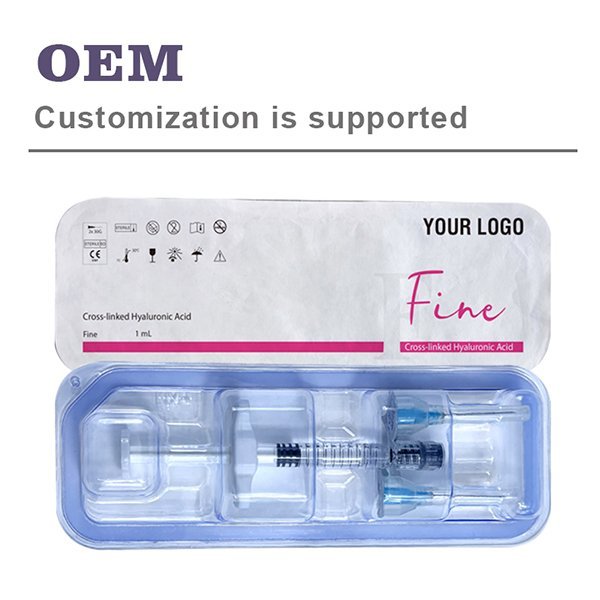
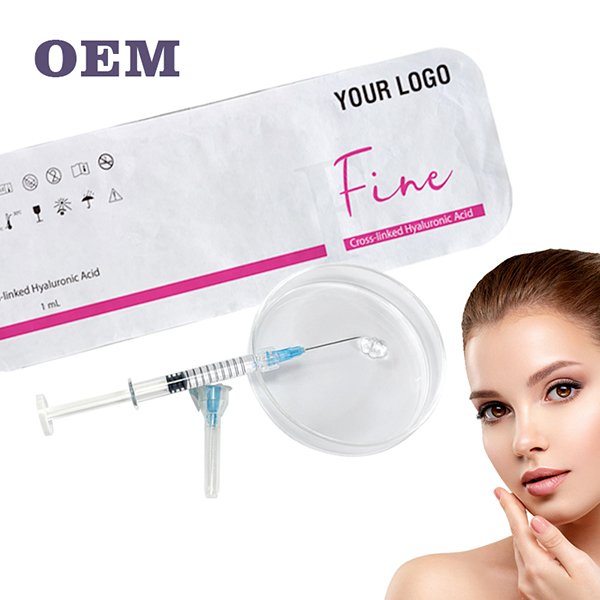
A: Total control. We provide the medical-grade primary packaging (syringe, stopper, needle). You own the secondary packaging (box, labels, IFU). Our design team can provide templates, but you will supply the final print-ready artwork for your brand, complying with your target market’s labeling regulations. We handle the precise, compliant application of your labeling to the product.