
In the ever-evolving landscape of aesthetic medicine, individuals seeking balanced, defined facial contours are increasingly turning to non-surgical solutions. Among these, jawline enhancement using hyaluronic acid (HA) dermal fillers has surged in popularity, establishing itself as a premier treatment for sculpting a stronger, more youthful, and harmonious profile. This rise is driven by HA’s unique biocompatibility, versatility, and natural-looking results. Unlike surgical jaw augmentation, HA fillers offer a minimally invasive approach with little to no downtime, making aesthetic refinement accessible and convenient. This article explores the multifaceted benefits of choosing hyaluronic acid for jawline contouring, examining the science behind its success, its comparative advantages, and what prospective patients can realistically expect from this transformative procedure.
The Science of Sculpting: How Hyaluronic Acid Works
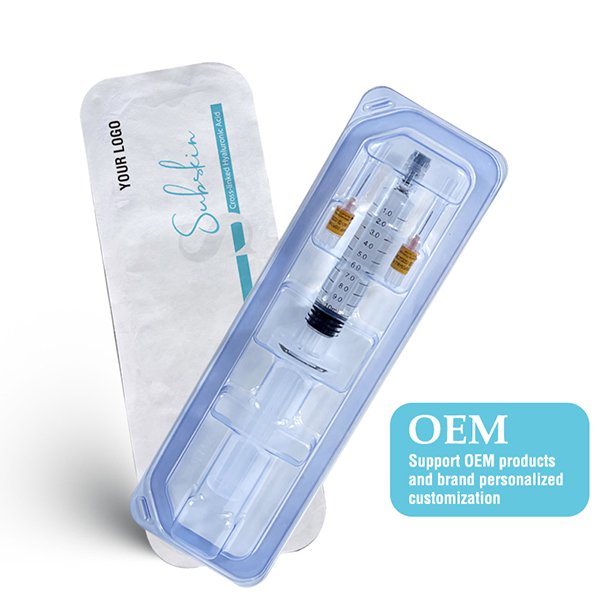
Hyaluronic acid is a substance naturally found throughout the human body, with high concentrations in the skin, connective tissues, and eyes. Its primary function is to retain water, keeping tissues well-lubricated and hydrated. In aesthetic medicine, cross-linked HA gels are used in dermal fillers. When expertly injected along the jawline, these gels provide immediate volumizing and structural support.
The mechanism is both elegant and effective. A skilled practitioner strategically places the HA gel at deep dermal or supraperiosteal levels to:
- Define the Mandibular Border: Adding volume along the edge of the jawbone from the chin to the angle of the jaw, creating a sharper, more distinct contour.
- Improve Projection: Enhancing a weak or receding chin to bring it into better harmony with other facial features.
- Camouflage Jowling: Lifting and supporting the skin along the lower face to soften the appearance of jowls, often caused by volume loss and skin laxity.
- Create Balance: Correcting facial asymmetry and creating a more balanced, aesthetically pleasing oval or heart-shaped facial framework.
The results are instant. Furthermore, HA stimulates neocollagenesis—the production of new collagen—providing subtle, long-term improvements in skin quality and structure even after the filler itself has been metabolized.
Key Advantages Over Alternative Enhancement Methods
Choosing hyaluronic acid for jawline definition presents a compelling array of benefits when compared to other surgical and non-surgical options.
1. Safety and Biocompatibility: As HA is identical to the molecule found in your body, the risk of allergic reaction is extremely low. No allergy skin testing is required prior to treatment, unlike with some older filler materials.
2. Reversibility: This is perhaps the most significant safety advantage. Should a patient be unhappy with the outcome, an enzyme called hyaluronidase can be injected to rapidly dissolve the HA filler, reversing the effects. This level of control is unavailable with permanent implants or surgical outcomes.
3. Minimal Downtime and Non-Surgical: The procedure is often completed within 30-60 minutes using topical or local anesthesia. Patients can typically return to most daily activities immediately, with only minor swelling or bruising that resolves within days.
4. Natural, Customizable Results: A master injector can place tiny amounts of product with precision, building a gradual, tailored enhancement that looks entirely natural. The goal is often a “refreshed” or “sculpted” appearance rather than an obvious “done” look.
5. Dual Action: Structure and Hydration: HA fillers not only add shape but also bind water in the skin, improving overall skin hydration, elasticity, and luminosity in the treated area—a bonus not offered by implants.
6. Gradual Evolution: For those new to treatments, HA fillers allow for a progressive approach. Patients can start conservatively and add more volume over subsequent sessions, ensuring comfort and satisfaction with the evolving result.
Realistic Outcomes, Longevity, and Investment
Managing expectations is crucial. While HA fillers create dramatic improvements, they are not a substitute for a surgical facelift in cases of severe skin laxity. Ideal candidates are those with mild to moderate skin elasticity loss, inherent facial asymmetry, or a naturally less-defined jawline seeking more angularity.
The longevity of results is a common question. While individual metabolism, the specific product used, and lifestyle factors play a role, most HA fillers in the jawline last between 12 to 24 months. The jawline is a relatively low-movement area, which contributes to the extended duration compared to fillers in more mobile areas like the lips.
The following table compares popular HA filler brands used for jawline enhancement, highlighting their key characteristics:
| Filler Brand (Manufacturer) | GEL Technology / Consistency | Primary Indication for Jawline | Notable Properties | Typical Longevity in Jawline |
|---|---|---|---|---|
| Juvederm Volux (Allergan Aesthetics) | VYCROSS technology, high cohesivity | First FDA-approved for chin & jaw augmentation. | High G’ (stiffness), designed specifically for deep structural contouring. | Up to 24 months |
| Restylane Defyne (Galderma) | XpresHAn Technology, flexible & dynamic | Chin profile, jawline, cheeks. | Resilient gel that adapts to facial movement, natural expression. | 12-18 months |
| Restylane Lyft (Galderma) | Cohesive polydensified matrix | Cheek augmentation, midface, jawline correction. | Robust lift capacity, used for adding volume and structure. | 12-18 months |
| Teosyal RHA 4 (Teoxane) | Resilient Hyaluronic Acid, high elasticity | Deep wrinkles, facial contours (chin, jawline). | Designed to resist dynamic facial movement, high flexibility. | 12-18 months |
Data sourced from manufacturer prescribing information and 2023-2024 clinical consensus publications.
The investment varies by geographic region, practitioner expertise, and the amount of product required. It is critical to prioritize the skill and experience of the injector over cost, as precise anatomical knowledge is essential for safe and beautiful outcomes.
The Essential Consultation and Treatment Journey
A successful outcome hinges on a thorough consultation with a qualified medical professional—ideally a board-certified dermatologist or plastic surgeon specializing in injectables. This consultation should involve a detailed facial analysis, discussion of medical history, and clear goal-setting. The practitioner will develop a personalized plan, determining the optimal product, injection points, and volume needed.
The treatment itself involves marking the injection sites, applying anesthetic, and then a series of precise injections. Most patients describe the sensation as mild pressure or brief discomfort. Post-treatment, common side effects like redness, swelling, and tenderness are normal and subside within a week. Applying cold compresses and avoiding strenuous exercise, alcohol, and blood-thinning medications for 24-48 hours is recommended.
A follow-up appointment at 2-4 weeks is standard to assess the settled results and determine if any subtle touch-ups are desired. With an expert at the helm, hyaluronic acid jawline enhancement is a powerful tool to restore definition, combat signs of aging in the lower face, and achieve a confident, sculpted look with unparalleled safety and flexibility.
Professional Q&A on Hyaluronic Acid Jawline Enhancement
Q1: I have a “square” face and want a more tapered, V-shaped look. Can HA fillers achieve this, or will they make my face look wider?
A: Strategically placed HA fillers can absolutely create a more tapered, harmonious appearance. A skilled injector uses a technique called “contour balancing.” Instead of adding width, they will place filler to enhance the chin projection (making it slightly more forward and pointed) and sharpen the mandibular angle. This draws the eye vertically, creating the illusion of a more slender, defined lower face. The goal is to create better proportions, not simply add bulk to the jaw.
Q2: How does treatment with HA fillers compare to using PDO thread lifts for jawline definition?
A: They are fundamentally different. HA fillers add physical volume and structural support directly, lifting the skin from beneath by filling lost space. PDO threads are biodegradable sutures that provide a temporary mechanical lift by physically “hooking” and pulling sagging tissues upward. Threads may also stimulate collagen. For jawline definition, HA fillers are generally considered the more reliable and predictable option for adding shape and contour. Threads may offer a subtle lift but do not add significant volume. Often, a combination of both modalities is used for comprehensive lower face rejuvenation.
Q3: Are the results from hyaluronic acid in the jawline truly reversible? What does the dissolution process involve?
A: Yes, this reversibility is a key medical safety feature. If dissolution is needed, an enzyme called hyaluronidase is injected into the treated area. This enzyme breaks down the hyaluronic acid gel, typically within 24-48 hours. The process is straightforward, but it must be performed by a professional. It is important to note that while the HA is removed, any natural collagen your body produced in response to the filler will remain. Minor swelling or redness at the injection site is common post-dissolution.
Q4: With the trend towards “preventative” aesthetics, is there a benefit to starting HA jawline contouring in my late 20s or early 30s?
A: Increasingly, yes. The “preventative” approach uses small amounts of HA to reinforce the facial scaffolding before significant volume loss and sagging occur. In the late 20s/early 30s, bone remodeling begins, and soft tissue descent starts subtly. Gentle enhancement of the jawline and chin can maintain a defined facial frame, potentially slowing the visible effects of aging and reducing the need for more extensive treatments later. The focus at this age is on refinement and maintaining natural structure, not on correcting significant aging changes.