
In the world of aesthetic enhancement, achieving a defined, sculpted jawline has become a hallmark of youth, balance, and strength. While surgical options like genioplasty or implants have long been available, the rise of non-surgical cosmetic procedures has revolutionized facial contouring. Leading this revolution is the use of hyaluronic acid (HA) dermal fillers for chin augmentation and jawline contouring. This minimally invasive treatment offers a compelling alternative for individuals seeking to enhance their profile, improve facial harmony, and combat signs of aging without going under the knife. This comprehensive guide delves into the science, procedure, benefits, and essential considerations of using hyaluronic acid filler to sculpt the perfect jawline.
Understanding the Science: How HA Fillers Reshape Your Profile
Hyaluronic acid is a naturally occurring sugar molecule found throughout our skin, connective tissue, and eyes. Its primary function is to retain water, providing volume, hydration, and plumpness. As we age, our natural production of HA decreases, leading to volume loss, sagging skin, and the formation of wrinkles and folds. In the lower face, this manifests as a softening of the jawline, the development of jowls, and a less defined chin.
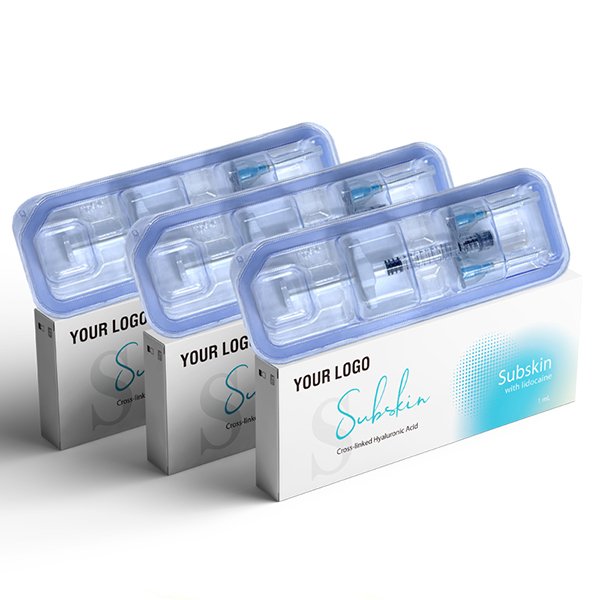
Injectable HA fillers are biocompatible gels designed to replicate this natural substance. When strategically injected along the jawline and chin by a skilled practitioner, they work by:
- Adding Structural Volume: They physically restore lost volume to the chin bone and mandibular (jaw) bone area, creating forward projection and lateral definition.
- Stimulating Collagen: Certain HA fillers (particularly those with higher cross-linking) provide a scaffolding that can stimulate the body’s own collagen production over time, offering longer-lasting structural support.
- Improving Skin Quality: The hydrophilic (water-loving) nature of HA draws moisture into the treated area, improving skin hydration, elasticity, and overall texture.
- Providing Lift and Support: By placing filler in key anatomical points, practitioners can create a lifting effect on the overlying soft tissue, subtly reducing the appearance of jowls and creating a sharper mandibular angle.
The goal is not to create an unnaturally sharp or oversized feature, but to restore balance. A well-projected chin can make the nose appear more proportionate, improve the neck-chin angle (the cervicomental angle), and create a more harmonious transition between the face and neck.
The Jawline Contouring Procedure: What to Expect from Consultation to Results
A successful HA jawline contouring treatment hinges on meticulous planning and expert execution. The journey typically follows these steps:
1. Comprehensive Consultation:
This is the most critical phase. A qualified medical professional (such as a board-certified dermatologist or plastic surgeon) will assess your facial anatomy, bone structure, skin quality, and aesthetic goals. They will examine your face at rest and in motion, discuss your medical history, and manage expectations. Advanced practitioners often use 3D imaging software to simulate potential outcomes. This is the time to ask questions about the practitioner’s experience, the specific HA product they recommend, and the total cost.
2. Treatment Day:
The procedure itself usually takes 30 to 60 minutes. The area is cleansed, and a topical numbing cream is often applied. Most premium HA fillers also contain lidocaine, a local anesthetic, to enhance comfort during injection. Using a fine needle or cannula (a blunt-tipped tube), the practitioner makes a series of precise injections along the pre-marked points of the jawline and chin. The cannula technique is increasingly favored for jawline work as it can reduce bruising and allows the practitioner to place product more smoothly along the tissue plane.
3. Molding and Assessment:
After injection, the practitioner will gently massage the area to ensure the filler is evenly distributed and smooth. You will be given a mirror to provide immediate feedback. While you will see volume instantly, the final, settled result emerges after 2-4 weeks as any minor swelling subsides and the filler fully integrates.
4. Recovery and Aftercare:
Downtime is minimal. Common immediate side effects include redness, slight swelling, tenderness, and potential bruising, which usually resolve within a few days to a week. Patients are advised to avoid strenuous exercise, excessive heat (saunas, sunbathing), and alcohol for 24-48 hours. Sleeping on your back is recommended initially.
Lasting Power, Costs, and Comparison with Other Contouring Methods
The results of HA jawline contouring are not permanent, which can be seen as both an advantage (flexibility, reversibility) and a consideration (maintenance required).
- Duration: Results typically last between 12 to 24 months, depending on the specific product used, the patient’s metabolism, lifestyle factors, and the amount of filler injected. Thicker, more cohesive fillers designed for structural support tend to last longer in the jawline area.
- Cost: The investment is significant and varies by geographic region, practitioner expertise, and the amount of product required. Jawline contouring often requires 2-4 syringes (or more) per session. A typical price range in the US for 2024 is $1,500 to $6,000+ per treatment.
To put HA filler in context, here is a comparison with other common jawline contouring methods:
| Method | How It Works | Duration of Results | Pros | Cons |
|---|---|---|---|---|
| Hyaluronic Acid Filler | Injectable gel adds volume & structure. | 12-24 months | Non-surgical, immediate results, reversible, minimal downtime. | Temporary, requires maintenance, higher cost over time. |
| Permanent Implant | Surgical placement of solid silicone implant. | Permanent | One-time procedure, permanent solution, can be very natural. | Surgical risks, longer downtime, irreversible, can feel unnatural. |
| Fat Grafting | Patient’s own fat is harvested, purified, and injected. | Long-lasting (but variable) | Uses natural tissue, can feel very soft, dual benefit of liposuction. | Requires surgery, unpredictable fat survival rate, longer recovery. |
| Thread Lift (PDO) | Barbed threads are inserted to lift skin. | 12-18 months | Lifting effect, stimulates collagen. | Less volume addition, risk of visible threads or asymmetry, temporary. |
| Skin Tightening | Energy-based devices (Ultherapy, RF) heat tissue. | 1-2+ years | No needles, stimulates collagen, good for mild laxity. | Subtler results, multiple sessions needed, not for volume loss. |
The Critical Importance of Choosing an Expert Practitioner
The jawline is a complex area with major nerves, blood vessels, and muscles. An in-depth understanding of the layered anatomy is non-negotiable for safety and optimal results. Choosing an injector based on price alone is a dangerous gamble. The ideal practitioner is a board-certified professional in dermatology or plastic surgery with extensive, proven experience in advanced facial contouring using fillers. Review their before-and-after portfolio specifically for jawline and chin treatments. A masterful injector will consider your entire facial balance, not just the jaw, ensuring a natural, proportional, and masculine or feminine result that enhances your unique features.
Professional Q&A on Hyaluronic Acid Jawline Contouring
Q1: Is hyaluronic acid filler for the jawline safe? What are the main risks?
A: When performed by a qualified medical professional, HA filler for jawline contouring is generally very safe. However, all medical procedures carry risks. Common temporary side effects include swelling, bruising, redness, and tenderness. More serious but rare complications include vascular occlusion (where filler is inadvertently injected into a blood vessel, which can block blood flow and damage tissue) and infection. This is why practitioner expertise and knowledge of “danger zones” in facial anatomy are paramount. The advantage of HA is that if a complication occurs or you dislike the result, it can be dissolved with an enzyme called hyaluronidase.
Q2: How painful is the procedure?
A: Discomfort is typically minimal to moderate. Most practitioners use a multi-pronged approach to maximize comfort: topical numbing cream is applied beforehand, and virtually all modern HA fillers are pre-mixed with lidocaine. For more sensitive patients or extensive work, some clinics offer dental blocks or other nerve blocks to fully numb the area. Many patients describe the sensation as a brief pinch or pressure.
Q3: I have a “weak chin” and early jowling. Am I a good candidate?
A: You may be an excellent candidate. HA fillers are particularly effective for addressing a retrusive (weak) chin, which can make the nose appear larger and the neck less defined. By adding projection to the chin and supporting the pre-jowl area (the area just in front of the developing jowl), fillers can create a more continuous, lifted jawline. However, for severe skin laxity or very heavy jowls, a combination therapy with a skin-tightening modality (like Ultherapy or radiofrequency) or even a surgical lower facelift may be recommended for a more comprehensive result.
Q4: Are the results “natural-looking,” or will I look overdone?
A: The goal of modern aesthetic medicine is enhancement, not alteration. Natural-looking results are absolutely achievable and are the standard for expert injectors. The key is using the right product (a cohesive, firm gel designed for structure) and placing the correct volume in the correct anatomical plane. The aim is for others to notice you look refreshed or more balanced, not to pinpoint exactly what was done. Overfilled, “pillowy,” or square jawlines are usually the result of poor technique or inappropriate product choice.
Q5: What is the latest data on the market growth and patient satisfaction for these procedures?
A: The demand for non-surgical contouring continues to surge. According to the American Society of Plastic Surgeons’ 2022 data, over 1.4 million soft tissue filler procedures were performed, with a significant portion dedicated to the chin and jawline. The global dermal filler market, valued at approximately $6.7 billion in 2023, is projected to grow at a compound annual growth rate (CAGR) of over 9% through 2030, driven largely by demand for HA-based products. Patient satisfaction rates are consistently high when procedures are performed by experienced professionals, often cited above 90% in clinical studies focusing on chin augmentation and jawline refinement.